
Meaning of the Name Benito
Cultural and Historical Origin of Benito
Gender Usage of Benito
Popularity of the Name Benito
Global Usage and Pronunciation of Benito
Personality Traits Associated with Benito
Thoughtful
Tends to reflect deeply before acting, valuing insight and understanding.
Reliable
Seen as someone others can depend on in both personal and professional settings.
Warm-hearted
Often expresses genuine care, empathy, and generosity toward friends and family.
Disciplined
Shows steady commitment to goals, with a strong sense of responsibility and focus.
Calm Leader
Leads through composure and quiet confidence rather than dramatic gestures.
Careers and Professional Orientation for Benito
Teacher or Professor
Suits someone patient, thoughtful, and dedicated to sharing knowledge.
Engineer
Appeals to a practical, disciplined mind that enjoys solving complex problems.
Healthcare Professional
Aligns with a caring, service-oriented personality focused on helping others.
Lawyer or Advocate
Fits an individual who values justice, structure, and clear communication.
Nonprofit or Community Leader
Ideal for someone driven to improve communities and support social causes.
Unique and Interesting Facts About Benito
Shared Latin Heritage
Benito connects directly to the ancient Latin Benedictus, linking modern bearers to centuries of history.
Religious Resonance
Its meaning of “blessed” has made it popular in families with strong spiritual or church traditions.
Cross-Language Variants
Related forms like Benedict, Benedetto, and Benoît show how the same root adapted across Europe.
Classic Yet Rare
In many regions, the name is familiar but not overused, giving it a distinctive, timeless feel.
Famous People Named Benito
- Benito Juárez: Former president of Mexico and key figure in the country’s liberal reforms.
- Benito Santiago: Puerto Rican former Major League Baseball catcher known for his strong arm.
- Benito Martínez (Bad Bunny): Puerto Rican rapper, singer, and global music star known professionally as Bad Bunny.
- Benito Pérez Galdós: Influential Spanish novelist and playwright of the 19th and early 20th centuries.
How to Pronounce Benito in Spanish and Italian
/beˈnito/ — Benito
- /be/: like “beh” in English “bed,” but shorter.
- /ˈni/: stressed “nee,” as in “knee.”
- /to/: like “toh,” similar to “toe” but a bit crisper.
beh-NEE-toh
Tattoo Design Ideas Featuring the Name Benito

Watercolor "Benito" Name Tattoo Design
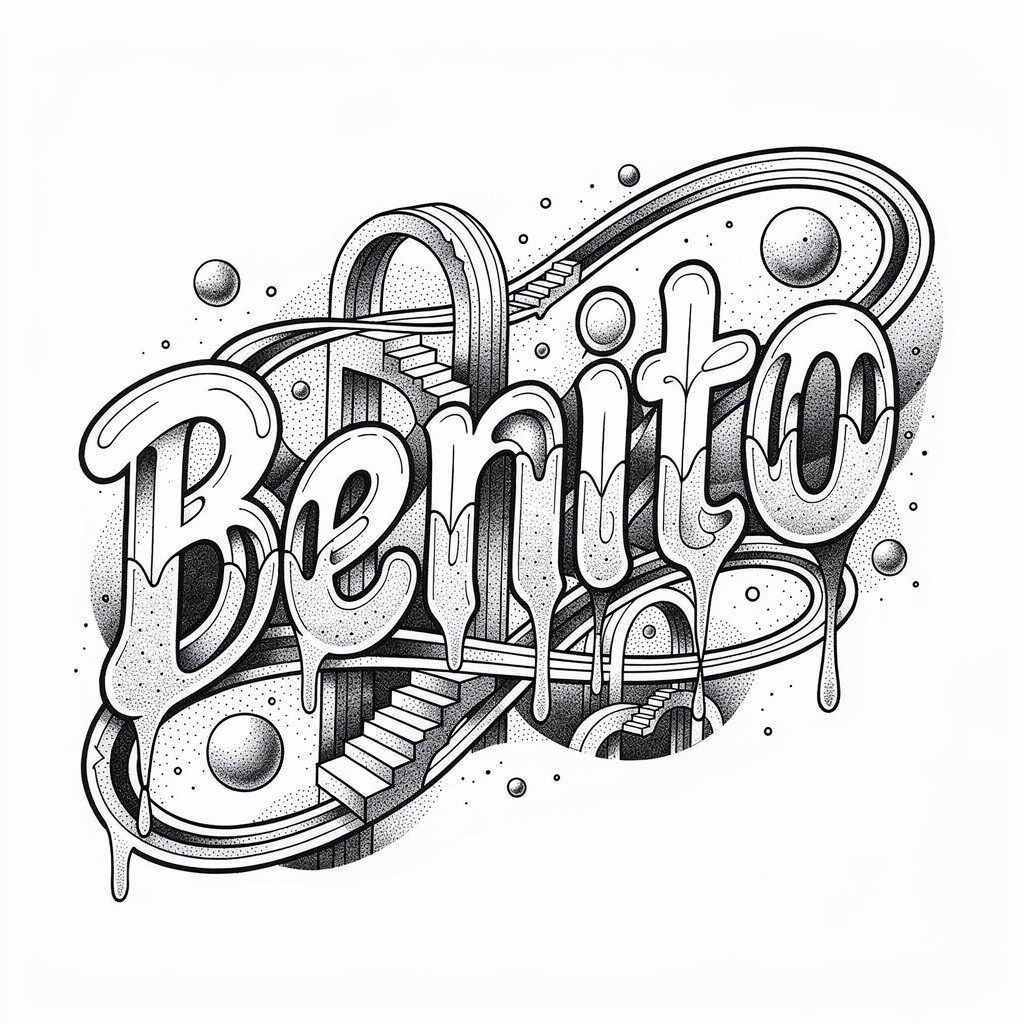
Surrealist "Benito" Name Tattoo Composition
Global distribution & gender ratio
Mexico
29.28% of recorded usage
Female: 1.89% · Male: 98.11%
United States
17.13% of recorded usage
Female: 1.08% · Male: 98.92%
Spain
8.84% of recorded usage
Female: 0.00% · Male: 100.00%
Brazil
7.92% of recorded usage
Female: 0.00% · Male: 100.00%
Belgium
6.26% of recorded usage
Female: 0.00% · Male: 100.00%
You may also like
Similar names
Benedict
Derived from Latin, meaning blessed, this name shares the same root and spiritual tone.Benedetto
An Italian form meaning blessed, closely related in both sound and religious heritage.Benoît
The French variant with the same core meaning of blessed and favored by saints and historical figures.Bennett
An English surname-turned-given-name that traces back to a meaning of blessed or well-favored.Benicio
A Spanish-origin name often linked to meanings of blessing and favored.Benno
A short Germanic-influenced name sometimes associated with blessing and gentle strength.Benny
A friendly diminutive used for several names meaning blessed or son of the right hand.Benedikt
A Central and Eastern European spelling maintaining the idea of being blessed.Benjamín
A Spanish form of Benjamin, typically interpreted as son of the right hand, associated with favor and blessing.Bence
A Hungarian name historically linked to Benedict and interpreted as blessed.
Frequently asked questions about benito
What does the name Benito mean?
Benito generally means ‘blessed,’ stemming from the Latin name Benedictus. It conveys ideas of divine favor, grace, and good fortune.
What is the origin of the name Benito?
Benito originates from the Latin Benedictus and developed mainly in Italian and Spanish-speaking cultures, later spreading through Europe and Latin America.
Is Benito a boy or a girl name?
Benito is traditionally a male given name, especially in Spanish- and Italian-speaking regions. Feminine or gender-neutral uses are rare.
How popular is the name Benito?
Benito has moderate but declining popularity in many countries. It remains more common in Spain, Italy, Mexico, and parts of Latin America than in English-speaking countries.
How do you pronounce Benito?
In Spanish and Italian, Benito is pronounced beh-NEE-toh, with the stress on the second syllable: /beˈnito/.
What are some similar names to Benito?
Names similar to Benito include Benedict, Benedetto, Benoît, Bennett, Benicio, Benno, Benny, Benedikt, Benjamín, and Bence.