
Meaning of the Name José
Origin of the Name José
Gender Association of the Name José
Popularity of the Name José
Global Usage of the Name José
Characteristic Features of People Named José
Leadership
Individuals named José are often associated with strong leadership qualities, exuding confidence and inspiring those around them.
Compassionate
Josés are typically empathetic, showing a deep sense of understanding and sensitivity towards others' emotions.
Culturally Rich
Bearing a name with deep roots, Josés often have a profound connection to their cultural heritage, valuing tradition and historical context.
Resourceful
Adaptability and resourcefulness are key traits, allowing those named José to navigate complex situations effectively.
Visionary
With a forward-thinking mindset, people named José often possess a clear vision for the future, leading progressive changes in their domains.
Religious or Spiritual
The name’s biblical origin translates into a tendency for some Josés to lean towards spiritual or religious paths.
Socially Engaged
Highly sociable, they tend to engage actively in community and social causes, driven by a sense of responsibility.
Charismatic
José's come across as charismatic individuals, often leaving a lasting impression in social settings.
Common Career Paths for People Named José
Leadership Roles
With strong leadership skills, many choose careers in management, politics, or entrepreneurship, where their abilities to lead and inspire are crucial.
Creative Fields
José's affinity for storytelling and expression leads them to careers in writing, performing arts, or visual arts, excelling as artists or authors.
Medical Sector
Compassion and empathy guide many Josés towards healthcare professions where they can provide care and support to others.
Education
As natural educators, they thrive in teaching roles, shaping the minds of future generations while sharing their knowledge and wisdom.
Community and Social Services
Driven by a sense of duty, Josés often work in social welfare, non-profits, or community service, advocating for those in need.
Engineering and Sciences
Analytical skills and a visionary approach lead Josés to explore scientific and engineering innovations, contributing to technological advancements.
Law and Justice
Their strong sense of justice and fairness makes law a common career choice, whether as lawyers, judges, or policy makers.
Religious or Spiritual Leadership
Inspired by the name's connotations, some may pursue religious studies and become spiritual leaders.
Unique and Interesting Characteristics of the Name José
Cultural Icon
In Spanish-speaking countries, the name José is akin to John, a symbol of traditional and familial legacy.
Literature and Fiction
José frequently appears in literary works and films, often depicting characters with rich, nuanced backgrounds.
Sports Glory
Many notable athletes, especially in soccer, bear the name José, contributing to its association with strength and perseverance.
Musical Influence
The name is celebrated in music, with various songs and artists incorporating José to evoke cultural identity.
Historical Figures
Numerous historical figures named José have left indelible marks in politics, exploration, and the arts.
Biblical Connections
Its origin from the biblical Joseph lends a sense of divinity and sacredness to the name.
Architectural Marvel
Certain cities are home to cathedrals and landmarks named after St. Joseph, highlighting the name’s religious significance.
Famous Surnames
In some cultures, José is commonly used as a middle name or surname, extending beyond its conventional use.
Famous People Named José
- José Saramago: Nobel Prize-winning author from Portugal
- José Mourinho: Acclaimed football manager from Portugal
- José Feliciano: Renowned Puerto Rican musician and guitarist
- José Rizal: National hero of the Philippines, known for his pivotal role in revolution
- José Carreras: Celebrated Spanish operatic tenor
Tattoo design prompts for the name 'josé'

Watercolor josé

Surreal josé
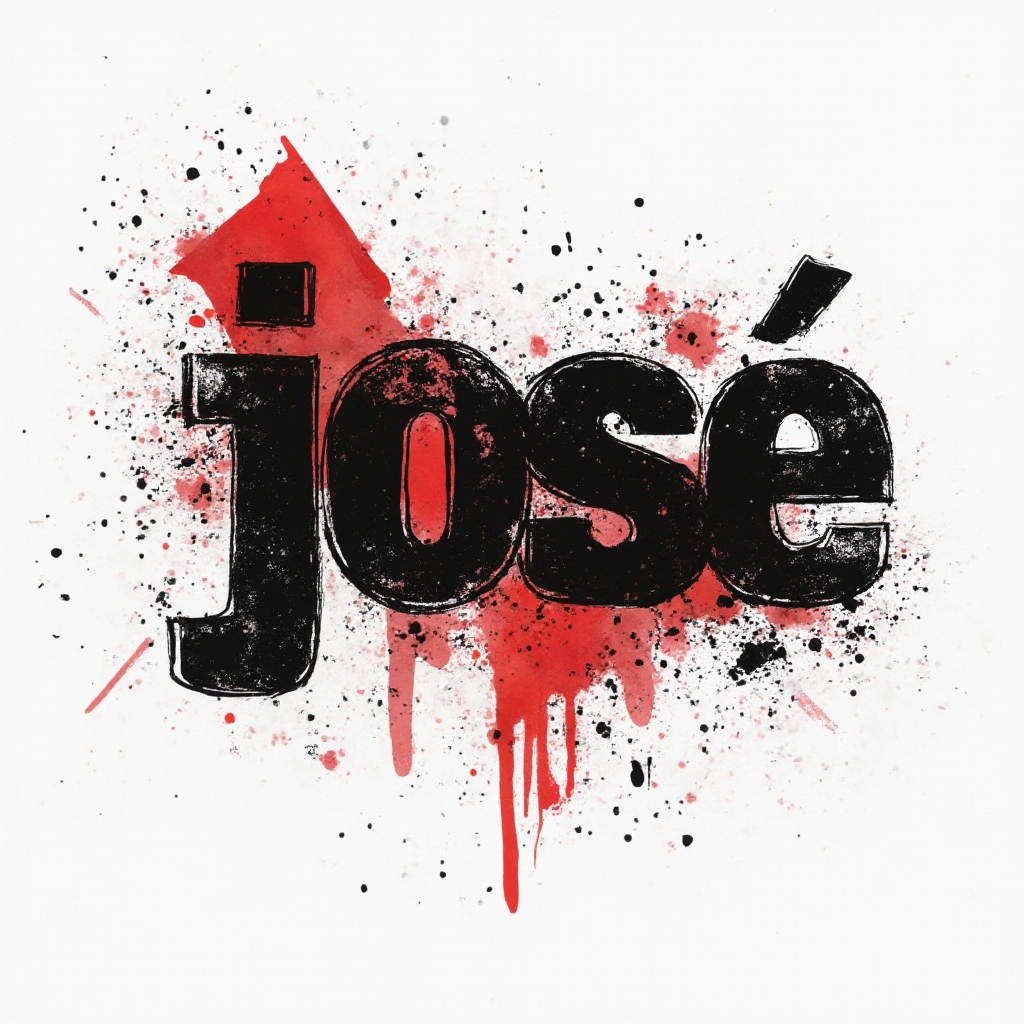
Trash Polka josé

AI-Original-Style josé
Global distribution & gender ratio
Brazil
43.66% of recorded usage
Female: 3.11% · Male: 96.89%
Mexico
20.56% of recorded usage
Female: 3.58% · Male: 96.42%
Spain
7.60% of recorded usage
Female: 8.67% · Male: 91.33%
Chile
4.88% of recorded usage
Female: 26.80% · Male: 73.20%
Portugal
3.73% of recorded usage
Female: 2.72% · Male: 97.28%
You may also like
Similar names
Josué
A masculine name closely related to José in Spanish-speaking cultures. It means 'The Lord is salvation'.Josef
A Scandinavian variation similar to José, meaning 'He will add'.Joseph
An English variant of José, sharing the same meaning, 'God will add'.Giuseppe
The Italian form of José, derived from the Hebrew, and it means 'God will add'.Yusuf
The Arabic equivalent of José, carrying the profound meaning of 'God will multiply'.Jozef
A Slavic variant of Joseph, meaning 'God will increase'.Joseba
A Basque variant of the name, closely tied to the meaning 'He will enlarge'.Gioseppi
A rare Sicilian version of the name, connected to the same biblical tradition and means 'Jehovah increases'.Josephine
A female variant derived from Joseph, embodying meanings of 'God will add'.Joséphine
The French female form of José/Joseph, meaning 'God will add'.