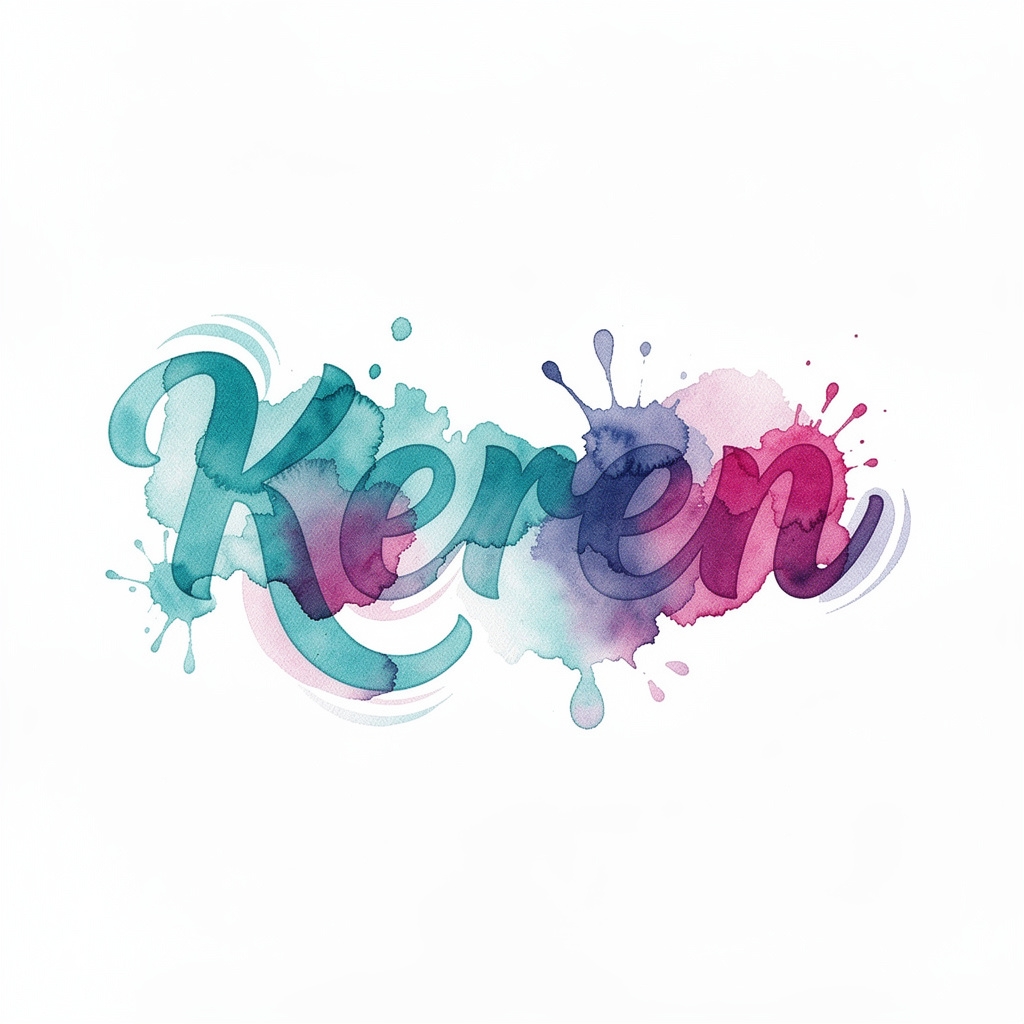
Watercolor Keren Name Tattoo Design
A soft, artistic watercolor tattoo design in which the name Keren flows organically within painterly washes of color.

A Hebrew name meaning horn or ray of light.
KEREN is a Hebrew name associated with a horn or a ray of light, symbolizing strength and radiance. This page explores its meaning, origin, gender usage, popularity trends, and related names.
The name Keren carries rich symbolic depth, traditionally linked to concepts of a horn, ray of light, and radiance. In Hebrew usage, it can suggest a beam of sunlight, a shining presence, or even a musical horn that proclaims joy. Because of these associations, Keren is often interpreted as a name that expresses strength, brightness, and inner beauty.
/ˈkɛr.ɛn/ - קרן
KEH-ren
Historically, the name Keren is rooted in ancient Hebrew culture and language. It appears in biblical contexts, most notably in the compound name Keren-Happuch, one of Job’s daughters, which adds depth to its spiritual and literary resonance. Over time, the name traveled beyond the boundaries of the original Hebrew-speaking communities, gaining recognition in Jewish, Christian, and broader global circles while always preserving its strong connection to the Hebrew heritage.
A soft, artistic watercolor tattoo design in which the name Keren flows organically within painterly washes of color.
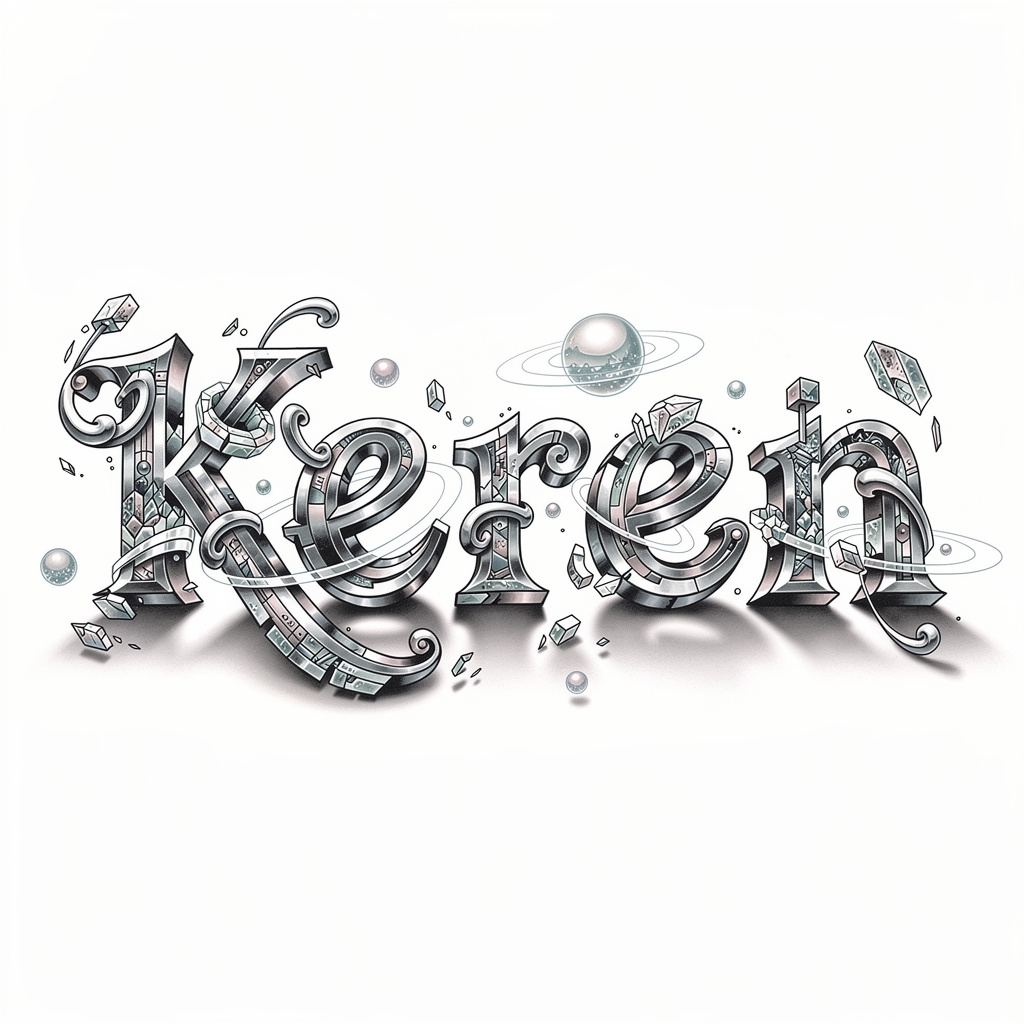
A surrealist tattoo concept in which abstract, dreamlike shapes fuse together to spell the name Keren.
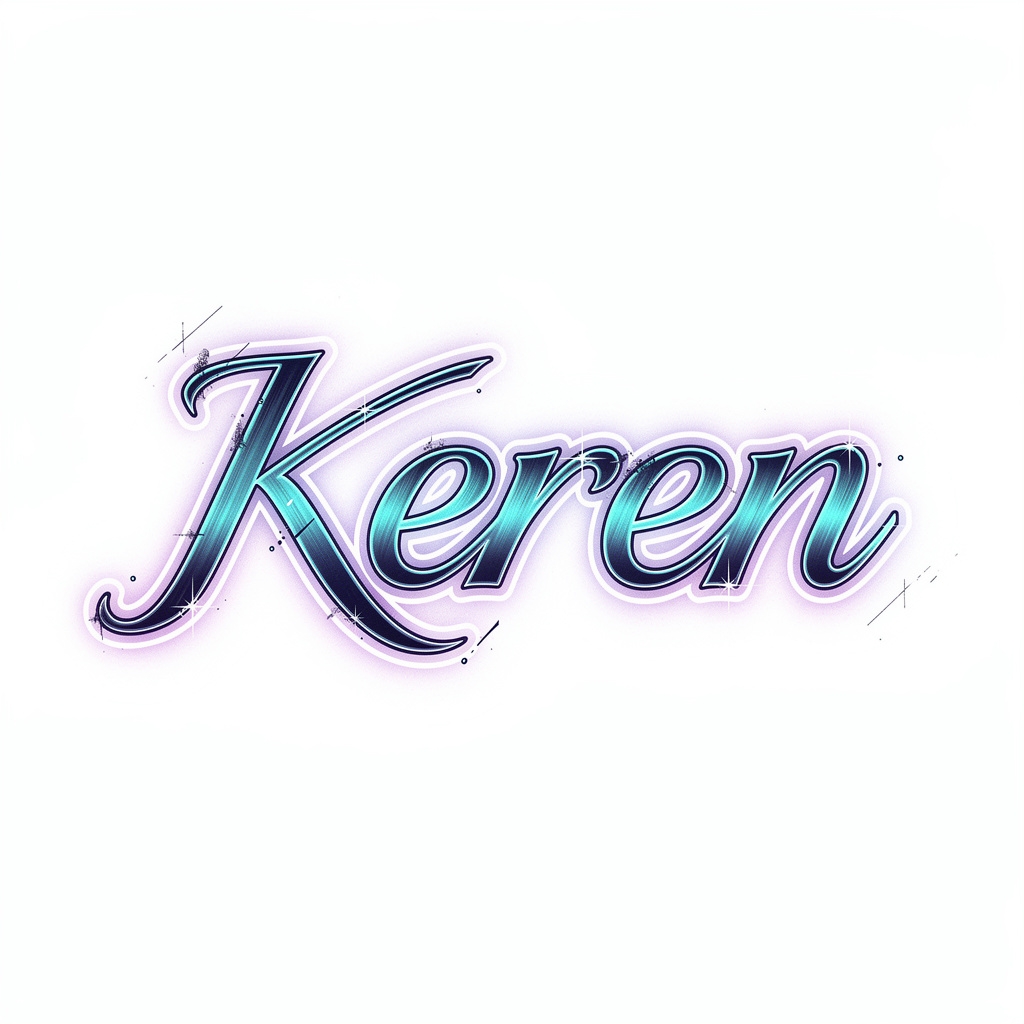
A futuristic NeoAura tattoo concept where the name Keren shines with sleek lines, gradients, and soft neon-like glows.
Although today Keren is most commonly used as a female given name, especially in Israel and many English-speaking countries, it can appear in different gender contexts depending on local tradition. In some cultures it is strictly associated with girls, while in others it may be considered more flexible. Modern naming trends and global mobility have opened space for parents worldwide to embrace Keren in a variety of gender expressions, though its primary use remains clearly female.
The popularity of Keren varies significantly by country and decade. In Israel, it has been a familiar and well-loved choice for girls since the late 20th century, experiencing waves of higher and lower use as fashions change. In English-speaking countries such as the United States, Canada, and the United Kingdom, Keren remains relatively uncommon, often appealing to parents seeking a distinctive biblical or Hebrew-inspired name that stands apart from more frequently used variants like Karen or Karin.
Across the world, the name Keren appears in Jewish, Christian, and increasingly secular communities. In **Israel**, it is widely recognized and typically pronounced with a clear two-syllable rhythm, KEH-ren. In **English-speaking countries**, pronunciation remains similar, though accents may soften consonants. In **Latin American** and **European** regions, spelling usually stays the same while local phonetics color the sound. This cross-cultural familiarity helps Keren fit comfortably in international settings.
Usage and gender distribution of the name Keren across different countries, based on data from GenderAPI.
Gender and popularity analysis by country is based on data from Gender API.
A classic name often associated with pure or chaste meanings in various traditions.
A variant linked to meanings such as pure and beloved in different European languages.
Common in French and other languages, with associations of purity and grace.
A biblical compound name traditionally interpreted as horn of cosmetic or horn of beauty.
A modern spelling variant that still hints at purity and gentle beauty.
Usually traced to meanings like dark-haired or little dark one from Irish roots.
A Cornish-influenced name associated with love and heartfelt affection.
Another Cornish-inspired form, often connected directly with the idea of love.
A name related to Irish place and family names, sometimes tied to dark or dusky meanings.
Often perceived as someone who brightens spaces and uplifts others.
Shows determination and resilience when facing challenges.
Tends to express ideas through art, words, or innovative thinking.
Cares deeply about people and responds with empathy.
Has a gift for understanding situations beneath the surface.
A role that allows visual and creative expression.
Supporting others with empathy and insight.
Sharing knowledge and inspiring new perspectives.
Advocating for social causes and change.
Communicating stories, ideas, and information clearly.
Linked to Keren-Happuch, one of the daughters of Job in the Hebrew Bible.
Associated with light, horn, and musical or spiritual resonance.
Commonly heard in contemporary Israel across generations.
Recognizable yet uncommon in many countries, giving it a distinctive sound.
Its compact two-syllable form makes it easy to pronounce and recall.
Answers to the most common questions people ask about the name Keren.
Keren is a Hebrew name traditionally associated with a horn, ray of light, or radiance, often interpreted as symbolizing strength, brightness, and inner beauty.
The name Keren comes from Hebrew and appears in the Bible, most notably in the compound name Keren-Happuch, one of the daughters of Job.
Keren is used primarily as a female given name, particularly in Israel and many English-speaking countries, though naming practices can vary by culture.
Keren is typically pronounced KEH-ren, with two syllables and the stress on the first syllable. In IPA, it is /ˈkɛr.ɛn/.
Keren is moderately popular in Israel and among some Jewish communities worldwide, while it remains relatively uncommon but recognizable in many English-speaking and European countries.