
Meaning of the Name Lucia
Origin of the Name Lucia
Gender Association of the Name Lucia
Popularity of the Name Lucia
Global Usage of the Name Lucia
Characteristic Features of People Named Lucia
Intelligent
Lucias are often perceived as quick thinkers with a keen sense of logic, showing sharp analytical skills.
Compassionate
Known for their empathy, they are usually seen as caring individuals who are considerate of others' feelings.
Optimistic
Carrying an aura of positivity, they tend to inspire those around them with their hopeful outlook.
Creative
Many Lucias possess a vivid imagination, often excelling in artistic endeavors.
Resilient
Lucias are known for their ability to withstand challenges and bounce back from adversity.
Charming
They often have an appealing presence that attracts people, making them well-liked in social settings.
Spiritual
With a deep connection to their inner selves, they may have a profound interest in spirituality or personal development.
Common Career Paths for People Named Lucia
Creative Arts
Lucias often gravitate towards creative professions, such as music, writing, or visual arts, where they can express their imagination.
Education
Many find fulfillment in teaching roles, driven by a desire to share their knowledge and help others learn.
Healthcare
With their compassionate nature, careers in nursing or psychology often appeal to them.
Public Relations
Their charm and communication skills make them excellent in maintaining relationships and promoting public images.
Entrepreneurship
Lucias' innovative minds often lead them to create and manage their own businesses successfully.
Environmental Science
Their love for nature often draws them to professions that focus on sustainability and conservation.
Unique and Interesting Characteristics of the Name Lucia
Pop Culture Presence
Lucia has appeared in various forms of media, including novels, films, and music lyrics, often representing a character of grace and wisdom.
Saint Lucia Reference
Saint Lucia, a figure synonymous with light, is celebrated across many cultures, most notably in Scandinavia on December 13th.
Literary Connection
The name is featured in the works of authors like Shakespeare, whose characters add layers of depth to this already rich name.
Global Celebrations
Lucia festivals are held worldwide, each adding unique cultural significance to the name.
Historical Usage
Historically, Lucia has been a favored name among royalty and nobility, often seen in European dynasties.
Famous People Named Lucia
- Lucia Popp: Slovak opera singer known for her soprano roles.
- Lucia Micarelli: American violinist and actress.
- Lucia Annunziata: Italian journalist and editor.
- Lucía Méndez: Mexican singer and actress.
- Lucia Scalco: Italian athlete specializing in race walking.
Lucia Custom Name Tattoo Concepts

Lucia Watercolor Name Tattoo Concept

Lucia Surrealism Name Tattoo Concept

Lucia Trash Polka Name Tattoo Concept
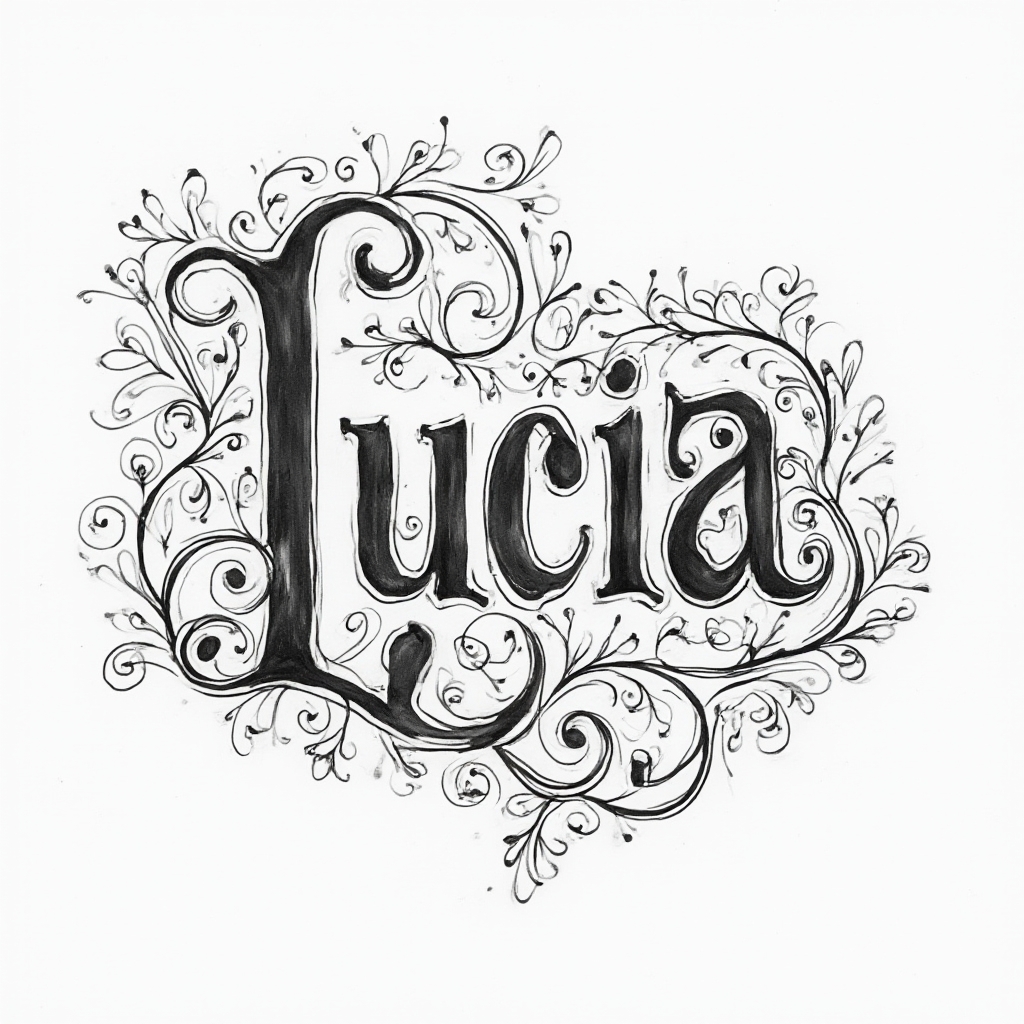
Lucia AI-Original-Style Name Tattoo Concept
Global distribution & gender ratio
Brazil
45.22% of recorded usage
Female: 99.27% · Male: 0.73%
Mexico
10.17% of recorded usage
Female: 99.76% · Male: 0.24%
Italy
7.73% of recorded usage
Female: 99.20% · Male: 0.80%
United States
6.30% of recorded usage
Female: 99.22% · Male: 0.78%
Spain
4.09% of recorded usage
Female: 100.00% · Male: 0.00%
You may also like
Similar names
Luisa
A Spanish and Italian name meaning famous warrior, sharing the melodic sound of Lucia.Luciana
Derived from the same root as Lucia, it signifies light and clarity.Lucy
An English variation meaning light, capturing the same essence as Lucia.Laura
Means bay laurel, indicating victory, and shares the beginning vowel sound with Lucia.Lisa
A diminutive of Elizabeth, meaning God is my oath, it similarly carries a soft sound.Lila
A name with an Arabic origin meaning night, offering an elegant and simple similarity.Luna
Of Latin origin meaning moon, it shares celestial ties with Lucia's bright connotation.Lydia
A Greek name meaning from Lydia, recognized for its classical appeal akin to Lucia.Maria
A timeless choice meaning sea of bitterness, frequently paired with Lucia in popular culture.Giulia
An Italian name meaning youthful, its lyrical vowel sounds complement those in Lucia.
Frequently asked questions about lucia
What is the meaning of the name Lucia?
Lucia means 'light', derived from the Latin word 'lux'.
What is the origin of the name Lucia?
Lucia originates from Italy, rooted in Latin tradition.
Is Lucia a male or female name?
Lucia is predominantly a female name.
How popular is the name Lucia?
Lucia is popular in several countries, especially in Europe and Latin America.
How is the name Lucia used globally?
Lucia is recognized globally with variations like Lucie and Lucía across different countries.
What are some common career paths for people named Lucia?
Lucias often pursue careers in the creative arts, education, or healthcare.
What are some characteristic features of people named Lucia?
Traits like intelligence, compassion, creativity, and resilience are commonly associated with Lucias.
What are some similar names to Lucia?
Similar names include Luisa, Luciana, Lucy, Laura, and Lisa.
Who are some famous people named Lucia?
Notable Lucias include Lucia Popp, Lucia Micarelli, and Lucia Annunziata.