
Meaning of the Name Miguel
Origin of the Name Miguel
Gender Association of the Name Miguel
Popularity of the Name Miguel
Global Usage of the Name Miguel
Characteristic Features of People Named Miguel
Leadership
Those named Miguel often display inherent leadership abilities, drawing others towards their decisive nature and charismatic presence.
Integrity
Miguel is often associated with strong moral principles, a trustworthy and reliable individual with an emphasis on honesty.
Creativity
Individuals with this name might have a leaning towards artistic and creative pursuits, showing a knack for innovation and imagination.
Confidence
People named Miguel are seen as confident, carrying themselves with self-assuredness and exuding decisiveness in their actions.
Empathy
There's often a deep sense of empathy and understanding in those named Miguel, making them approachable and compassionate.
Intelligence
They frequently exhibit intellectual curiosity, quick-thinking, and a strong appetite for learning and knowledge acquisition.
Resilience
Miguels are often resilient, showcasing an ability to persevere through challenges, strengthening their character over time.
Common Career Paths for People Named Miguel
Business Leadership
Many with this name excel in leadership roles in the corporate world, often attaining executive positions.
Creative Arts
Individuals named Miguel might pursue careers in music, literature, or visual arts, drawing from their creative flair.
Education
Teaching and academia are common fields where Miguels can prosper, driven by their intelligence and empathy.
Healthcare
The empathetic nature and desire to help others often draw Miguels to careers in medicine or psychotherapy.
Engineering
For those inclined towards problem-solving, engineering provides a platform where analytical skills are honed.
Politics
Some Miguels find success in public service or politics, leveraging their communication and leadership skills.
Sports
Athletics can be a common area of interest, where determination and resilience help achieve high performance.
Unique and Interesting Characteristics of the Name Miguel
Literary Connections
The name Miguel is immortalized in literature by Miguel de Cervantes, the renowned author of 'Don Quixote.'
Religious Significance
Rooted in religious history, it draws from angelic associations, primarily Archangel Michael.
Musical Heritage
Figures like Miguel Bosé highlight the name's connection to global music culture.
Historical Figures
Numerous historical leaders across Latin America bear the name, signifying its societal influence.
Pop Culture
The pervasive use of Miguel in films and TV series highlights its enduring cultural appeal.
International Appeal
As a universal name, Miguel fits seamlessly across a multitude of cultures without losing its essence.
Name Day Celebrations
Observed in some countries on September 29th, aligning with religious festivity days such as the feast of St. Michael and All Angels.
Famous People Named Miguel
- Miguel de Cervantes: Spanish writer, author of 'Don Quixote.'
- Miguel Bosé: Spanish pop musician and actor.
- Miguel Angel Jimenez: Spanish professional golfer.
- Miguel Cotto: Puerto Rican professional boxer and world champion.
- Miguel Ferrer: American actor known for roles in 'RoboCop' and 'NCIS.'
- Miguel Hidalgo: Mexican Roman Catholic priest and revolutionary leader.
Tattoo design prompts integrating the name 'miguel' in multiple art styles

Watercolor Aura

Surreal Dreamscape
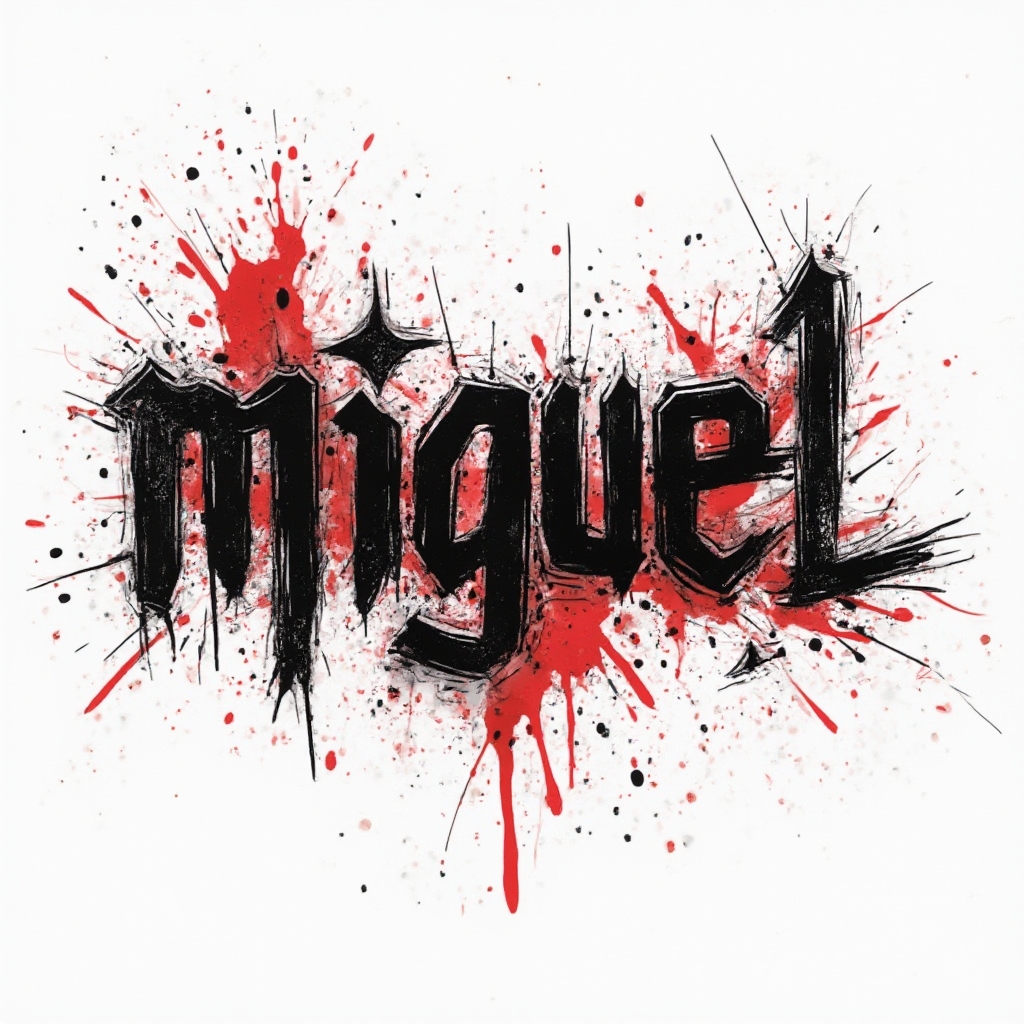
Trash Polka Impact
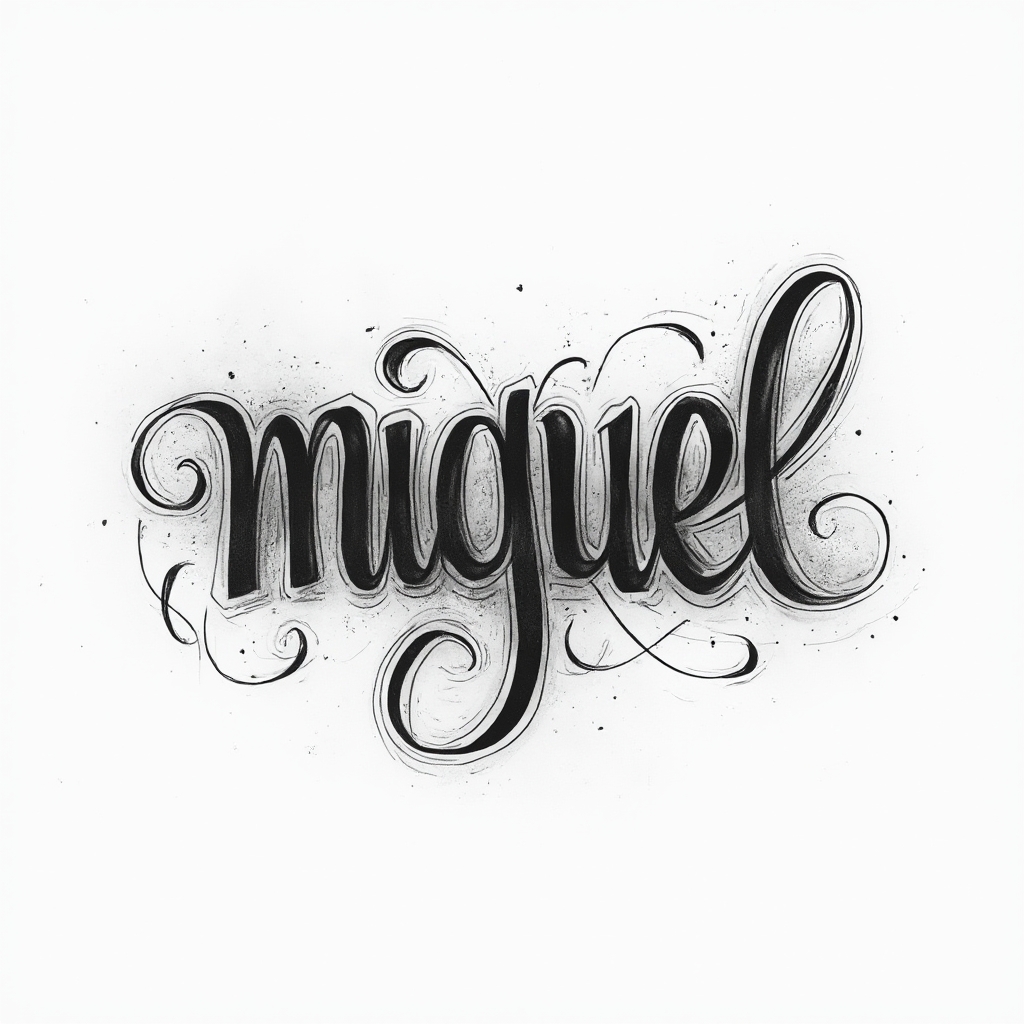
AI-Original-Style Eclipse Lines
Global distribution & gender ratio
Mexico
37.81% of recorded usage
Female: 0.24% · Male: 99.76%
Spain
10.14% of recorded usage
Female: 0.57% · Male: 99.43%
United States
9.58% of recorded usage
Female: 0.51% · Male: 99.49%
Brazil
9.19% of recorded usage
Female: 1.13% · Male: 98.87%
Portugal
5.39% of recorded usage
Female: 0.30% · Male: 99.70%
You may also like
Similar names
Miguelito
A diminutive of Miguel, this name carries the same meaning and affection, often used as a nickname in Spanish-speaking regions.Mikael
A Scandinavian variant of Michael, retaining the same strong meaning and religious significance as Miguel.Michele
The Italian form of Michael, sharing the same meaning while offering a charming variant across cultures.Mijael
A Hebrew alternative, maintaining the original meaning. Common in regions with ties to Jewish traditions.Miguelín
Another affectionate form of Miguel used in Spanish-speaking regions, carrying an endearing meaning.Michael
The English equivalent of Miguel, internationally recognized with the same meaning and historical depth.Michel
The French variant with a sophisticated touch, encapsulating the same meaning as Miguel.Mickael
A contemporary twist on the traditional Michael, used in various regions with retained meaning.Micheal
A phonetic Celtic alternative to Michael seen in Ireland, holding the original meaning intact.Mikel
Basque version with a rustic charm, upholding the same meaning as Miguel across Basque-speaking areas.