
Meaning of Alexander
Origin of Alexander
Gender Association of the Name Alexander
Popularity of the Name Alexander
Global Usage of the Name Alexander
Characteristic Features of People Named Alexander
Leadership
Alexanders are often seen as natural leaders, confidently guiding teams with charisma and vision.
Bravery
Known for their courage, individuals named Alexander face challenges head-on, with unwavering strength.
Intelligence
A hallmark trait, Alexanders are praised for their intellectual prowess and problem-solving skills.
Charisma
With magnetic personalities, Alexanders easily draw people in, inspiring loyalty and admiration.
Determination
Known for their persistence, Alexanders relentlessly pursue their goals until success is achieved.
Compassion
Balanced with their ambition, Alexanders often show strong empathy and care for others.
Pragmatism
Grounded in realism, Alexanders prioritize practical solutions over idealistic visions.
Articulate
Gifted communicators, Alexanders express their ideas with clarity and persuasive eloquence.
Common Career Paths for People Named Alexander
Leadership Roles
Given their strong leadership skills, many Alexanders thrive as CEOs, managers, and political leaders.
Academia
With a penchant for learning, many Alexanders excel in educational roles, such as professors and researchers.
Innovation
Drawn to technology and engineering fields, Alexanders frequently contribute to groundbreaking advancements.
Legal Field
Their articulate nature and analytical minds make Alexanders effective lawyers and judges.
Creative Arts
Some Alexanders pursue careers in the arts, thriving as writers, musicians, and designers.
Public Speaking
With natural charisma, Alexanders excel in communications and public relations roles.
Healthcare
Compassionate Alexanders often choose medical and psychological professions, assisting others in need.
Unique and Interesting Characteristics of the Name Alexander
Historical Prestige
Alexander the Great left a legacy that still resonates today, making the name synonymous with leadership.
Pop Culture
The name appears in literature, films, and TV shows, with characters like Alexander 'Xander' Harris in "Buffy the Vampire Slayer."
Global Variations
Spanning languages, Alexander, Alexandre, Alejandro, Sascha, and more showcase the name's adaptability.
Noble Affiliation
Many royals, such as Tsar Alexander II of Russia, carry the name, reinforcing its royal connotation.
Linguistic Influence
The name's etymological roots influence words like "Alexandrine," a type of poetic meter.
Mythical Ties
In mythology, figures like Paris of Troy, originally named Alexander, highlight its ancient mystique.
Commemorative
Statues, cities, and educational institutions, such as Alexandria, bear the name, marking historical achievements.
Famous People Named Alexander
- Alexander the Great: Ancient Macedonian ruler and military strategist.
- Alexander Hamilton: Founding Father of the United States.
- Alexander Graham Bell: Inventor of the telephone.
- Alexander Skarsgård: Swedish actor known for roles in "True Blood" and "Big Little Lies".
- Alexander Fleming: Scottish bacteriologist and discoverer of penicillin.
- Alexander Pushkin: Renowned Russian poet and literature pioneer.
- Alexander McQueen: Influential British fashion designer.
Alexander Artistic Tattoo Concepts Collection

Alexander Watercolor Name Tattoo Concept
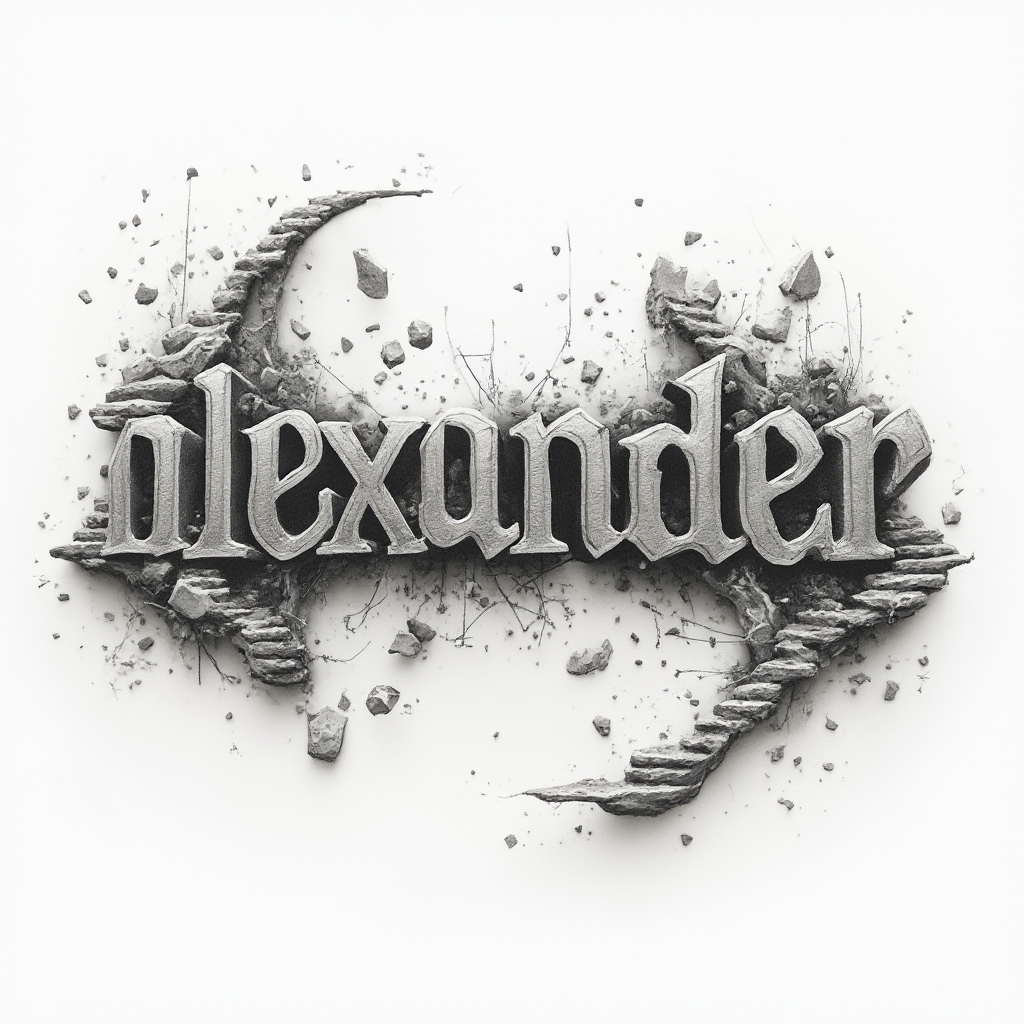
Alexander Surrealism Name Tattoo Design

Alexander Trash Polka Name Tattoo Concept

Alexander AI-Original-Style Name Tattoo Design
Global distribution & gender ratio
Russia
27.73% of recorded usage
Female: 0.36% · Male: 99.64%
United States
14.54% of recorded usage
Female: 1.02% · Male: 98.98%
Germany
6.43% of recorded usage
Female: 0.58% · Male: 99.42%
Ukraine
5.52% of recorded usage
Female: 0.37% · Male: 99.63%
Indonesia
4.06% of recorded usage
Female: 0.51% · Male: 99.49%
You may also like
Similar names
Alexandra
Derived as the feminine form of Alexander, meaning protector or defender of men.Alessandro
Italian adaptation, retaining the strong and protective essence of Alexander.Alexis
A unisex variant, also symbolizing guardian or defender.Xander
A modern, shorter version, often associated with bravery and strength.Alastair
Scottish variant linked to leadership and nobility.Alejandro
Spanish form retaining the meaning of protector or defender.Alexei
Russian version thought to embody noble defenses and grace.Alexandria
Echoes the city built by Alexander the Great, relating to guardianship.Alexandros
An exact Greek form maintaining historical connotations of power and defense.Lex
A diminutive of Alexander, signifying steadfastness and vigor.
Frequently asked questions about alexander
What is the meaning of the name Alexander?
The name Alexander means 'protector of men' or 'defender of the people'.
What is the origin of the name Alexander?
Alexander originates from Greek, combining 'alexein' for defend and 'aner' for man.
Is Alexander a male or female name?
Primarily male, Alexander can also be adapted for females, as seen in variations like Alexandra.
How popular is the name Alexander?
Alexander is consistently popular, ranked highly in many country's baby name charts.
How is the name Alexander used globally?
Alexander is used widely, with variations like Alejandro in Spanish and Alexandre in French.
What careers do Alexanders commonly pursue?
Many Alexanders find success in leadership, academia, technology, law, and creative fields.
What are some characteristic features of people named Alexander?
Individuals named Alexander often exhibit leadership, bravery, intelligence, and charisma.
What are some similar names to Alexander?
Names like Alexandra, Alejandro, Xander, and Alexis share similarities with Alexander.
Who are some famous people named Alexander?
Famous Alexanders include Alexander the Great, Alexander Graham Bell, and Alexander Hamilton.