
Beytullah Watercolor Splash Name Tattoo Concept
A vibrant watercolor-inspired tattoo concept where the name "beytullah" flows as colorful, brush-like lettering with splashes and soft gradients on a clean white background.

Means “House of God”; a name with spiritual significance.
BEYTULLAH is a name of Arabic origin meaning “House of God,” symbolizing devotion and spiritual closeness. This page explores its meaning, origin, gender usage, popularity trends, and related names.
The name Beytullah holds a profoundly spiritual meaning, often interpreted as a House of God. This significance is derived from the Arabic roots "beyt" meaning "house" and "Allah" referring to "God." The name conveys a sense of spiritual closeness and divine presence. This meaningful connection often resonates deeply with those who share or encounter the name Beytullah.
/beɪˈtʊlɑː/ - بيتلله
The name Beytullah is pronounced as 'bay-too-lah,' where 'bay' rhymes with 'say,' 'too' is like 'too,' and 'lah' as 'la' in 'father.'
The name Beytullah has its origins in Arabic culture. It is a compound of the words "beyt," meaning "house," and "Allah," which stands for "God." This rich heritage reflects religious and spiritual associations, deeply embedded in Islamic traditions. The name Beytullah serves as a testament to its historical and cultural roots within the Arabic-speaking world.
A vibrant watercolor-inspired tattoo concept where the name "beytullah" flows as colorful, brush-like lettering with splashes and soft gradients on a clean white background.
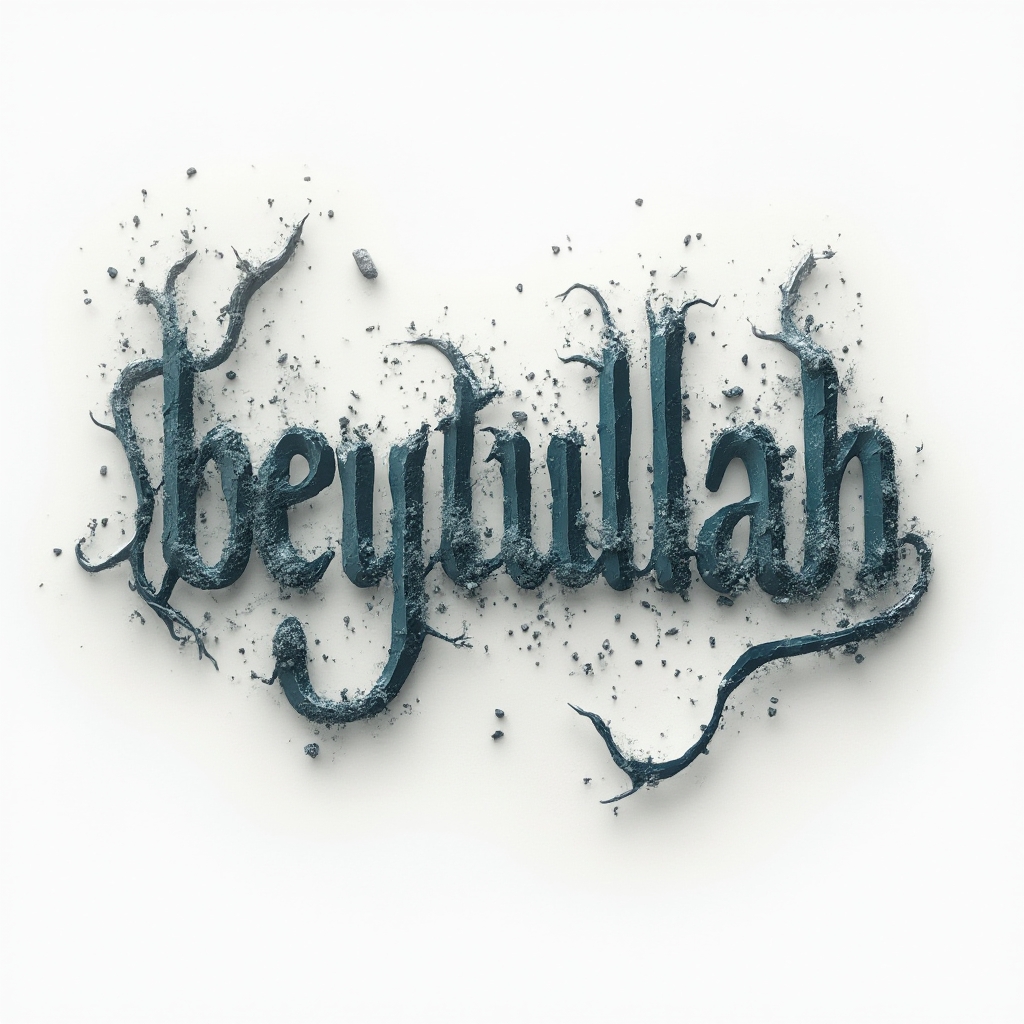
A surrealist tattoo concept where the name "beytullah" transforms into floating stone and liquid-metal letterforms, creating a dreamlike abstract structure on a white background.
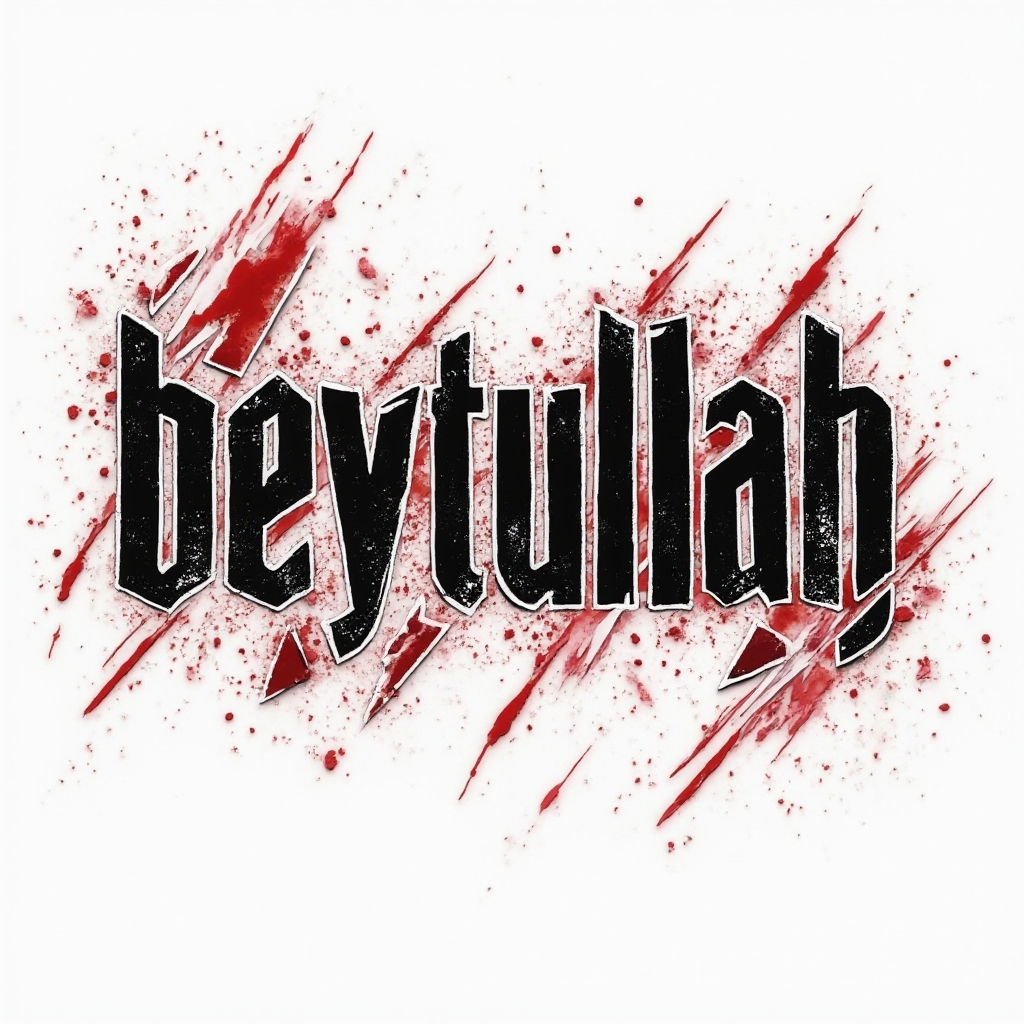
An intense Trash Polka-inspired tattoo concept turning the name "beytullah" into fractured black and red letterforms with splatters and grunge texture on a stark white background.

A futuristic dimensional tattoo concept where the name "beytullah" becomes sharp, three-dimensional angular lettering with glossy facets and clean shadows on a white background.
The name Beytullah is typically associated with the male gender. Predominantly used for boys, it reflects strong cultural ties within Arabic and Islamic communities. While it's rare for females to have this name, some modern contexts might embrace its use beyond traditional gender roles, yet it remains chiefly male-oriented. Notable individuals named Beytullah are usually of male gender.
The name Beytullah enjoys considerable popularity in regions like Turkey and the Arab world. Historically, it has been a well-liked choice among parents, though its global ranking varies. In recent trends, while maintaining a steady presence, its popularity sees more growth in communities aligning closely with its cultural origins. The name's spiritual connotations continue to endear it to many.
Globally, the name Beytullah is most common in countries such as Turkey, Saudi Arabia, and other Middle Eastern nations. Its pronunciation and usage may vary slightly among different Arabic dialects, yet its core spiritual meaning remains intact. Cultural influences dictate that the popularity of Beytullah is higher in regions with a significant Muslim population, reflecting its deep religious roots.
Usage and gender distribution of the name Beytullah across different countries, based on data from GenderAPI.
Examination of gender and popularity by nation utilizes data from Gender API.
Similar in its religious roots, the name Abdullah means Servant of God.
This name has a historical Islamic significance and means Moist or Wetting.
A strong name meaning Steadfast or Lion.
A revered name meaning Chosen or Selected.
Meaning Flourishing or Life, it's a popular name in many Islamic cultures.
A historical name meaning God Will Hear.
Meaning God Increases, known for its biblical and Quranic connotations.
A name symbolizing Prosperity and Growth.
An esteemed name signifying Exalted or High.
A name denoting Beauty and Grace.
Individuals named Beytullah are often deeply spiritual, drawing from the religious underpinnings of their name.
They tend to possess a natural charisma that attracts people to them.
Beytullahs are known for their compassion and empathy towards others.
They often showcase a strong sense of determination and resilience.
These individuals usually have a keen sense of intuition and insight.
People named Beytullah often excel in leadership roles, owing to their strong sense of direction and purpose.
Many are drawn towards careers in religious or spiritual services, including clergy or religious counselors.
They might work in community service roles, using their compassion to aid others.
Some may thrive in business environments, utilizing their charisma and strategic thinking.
A tendency towards intellectual pursuits may lead them into education or research roles.
Beytullah appears in several regional films and literature, reflecting its cultural significance.
Historically associated with respected clerics and scholars.
The name is often highlighted during religious festivals and gatherings.
In Islamic art and calligraphy, the name is frequently celebrated.
Several renowned figures in sports and arts bear the name Beytullah.
Answers to the most common questions people ask about the name Beytullah.
The name Beytullah means 'House of God,' stemming from Arabic roots combining 'beyt' for 'house' and 'Allah' for 'God.'
Beytullah originates from the Arabic language, with strong ties to Islamic culture.
Beytullah is most popular in Turkey and the Arab world, reflecting its deep spiritual significance.
Beytullah is predominantly a male name.
The name Beytullah is widely used in Turkish and Arabic-speaking countries, with consistent popularity in Muslim communities.
People named Beytullah often pursue careers in leadership, religious services, and community outreach.
Beytullahs are generally spiritual, charismatic, and compassionate, often displaying strong will and insight.
Similar names to Beytullah include Abdullah, Bilal, Hamza, Mustafa, Omar, Ismail, Yusuf, Zaid, Sami, and Zain.
Beytullah is pronounced as 'bay-too-lah,' with emphasis on 'bay' and 'lah.'