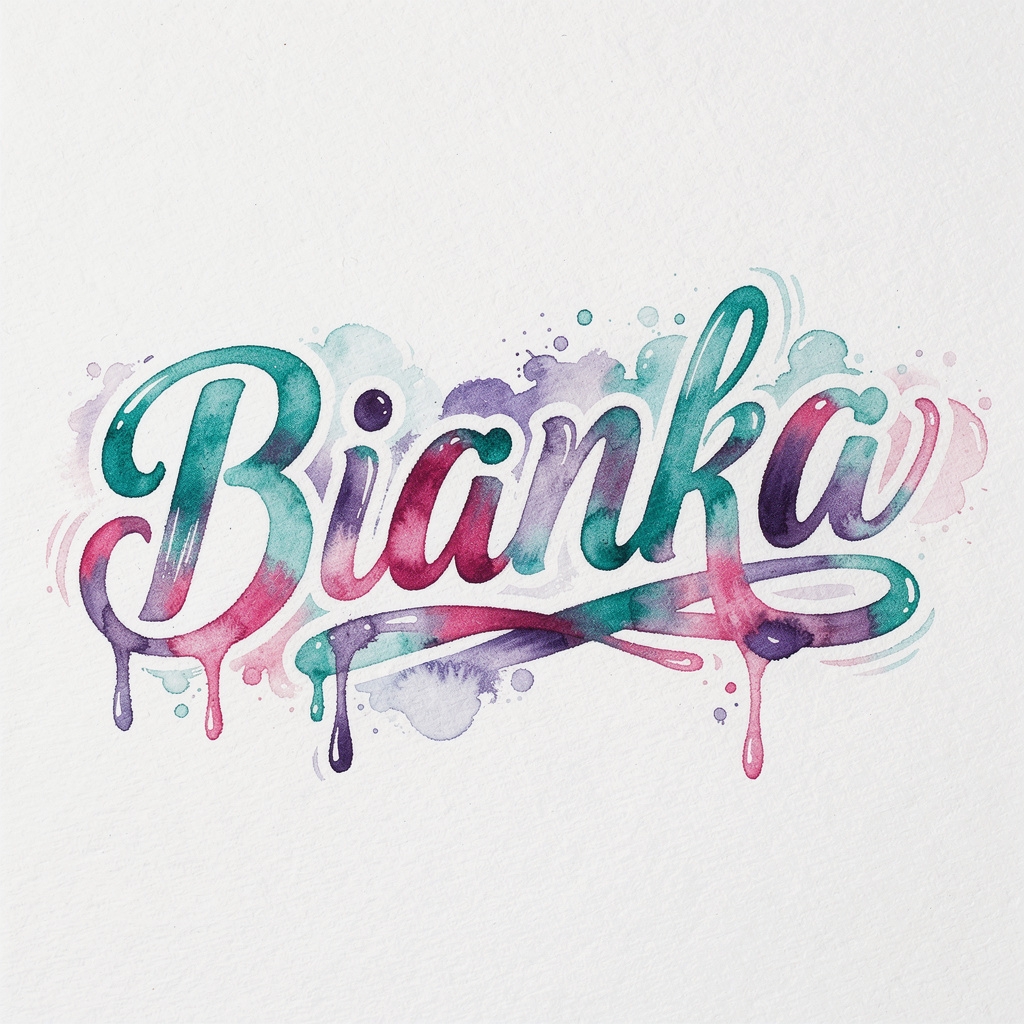
Watercolor Bianka Name Tattoo Design
A delicate watercolor-style tattoo concept where the name Bianka flows like liquid color across a clean white background.

Means pure and bright; linked to grace and inner warmth.
BIANKA is a feminine name associated with purity and brightness, symbolically linked to clarity, innocence, and gentle grace. This page explores its meaning and cultural roots, gender usage, popularity over time, and related names.
The name Bianka is widely associated with the ideas of pure, innocent, and white in a symbolic sense, reflecting clarity, sincerity, and moral integrity. Often connected to refined elegance and inner grace, Bianka suggests someone whose presence inspires peace, emotional warmth, and love, embodying a calm yet quietly confident personality.
/ˈbjanka/ - Bianka
BYAN-kah
The name Bianka is generally considered a variant of "Bianca," which stems from the late Latin word "blancus," meaning "white" or "bright." It became popular in Romance-language regions, especially in Italy, and later spread across Hungary, Germany, and other parts of Europe. Over time, Bianka developed as a favored spelling in Slavic and Central European cultures, maintaining its association with brightness and purity.
A delicate watercolor-style tattoo concept where the name Bianka flows like liquid color across a clean white background.
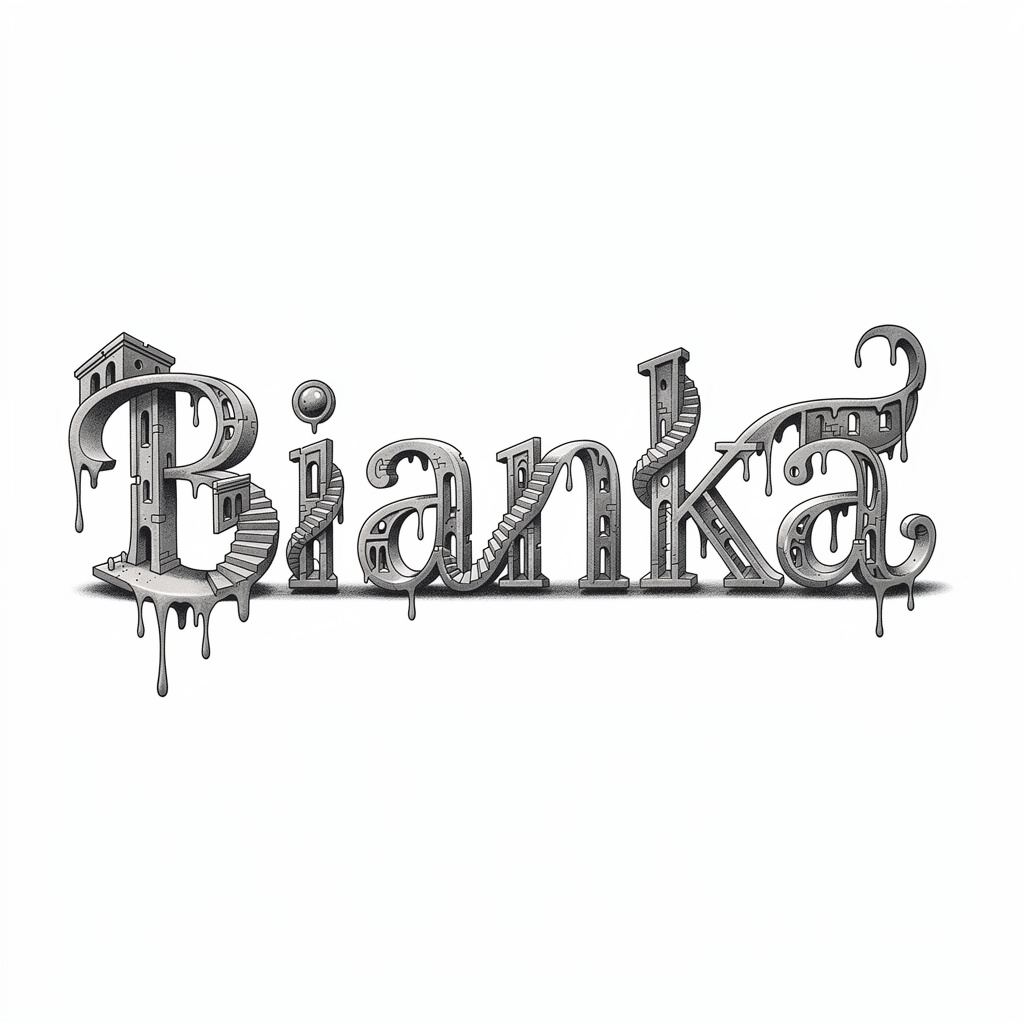
A surrealist tattoo design where the letters of Bianka transform into impossible, dreamlike structures.
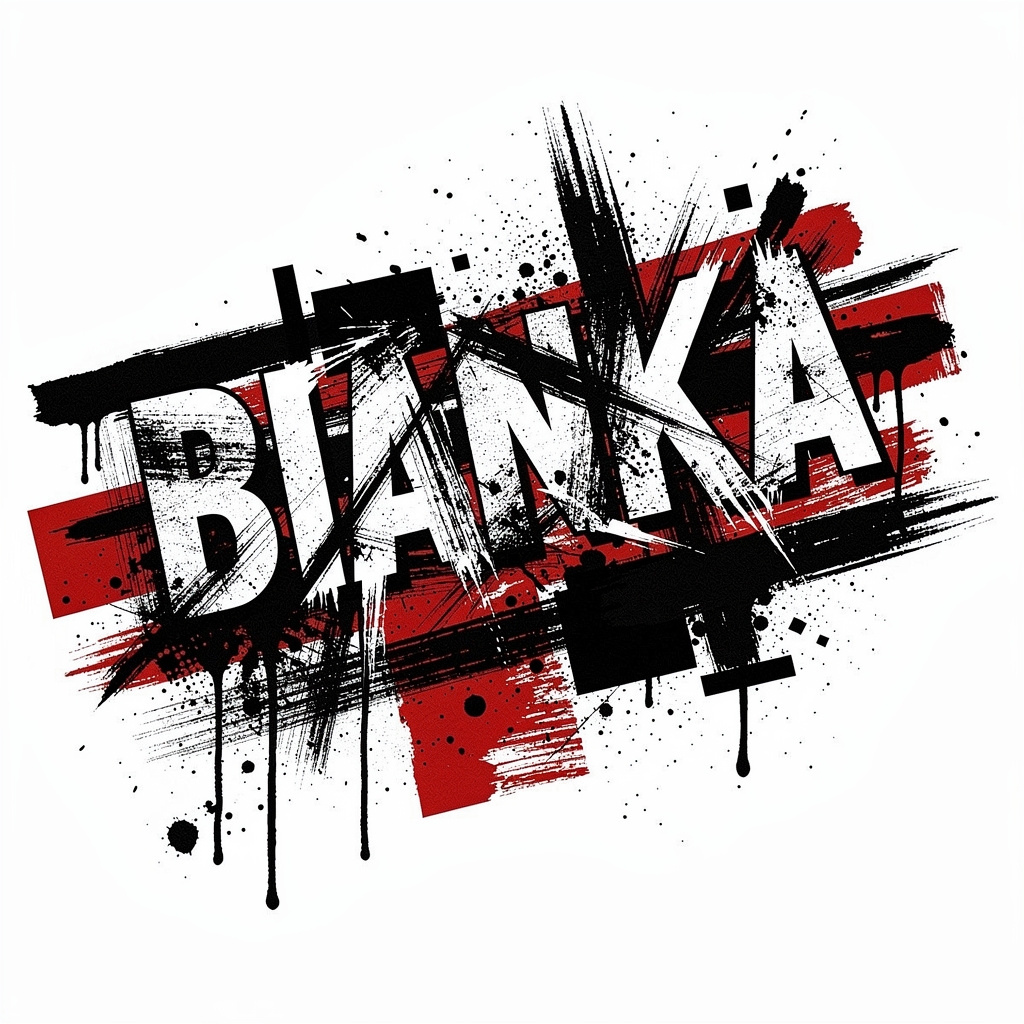
A bold Trash Polka tattoo design where the name Bianka is embedded in a high-contrast mix of black strokes and red accents.
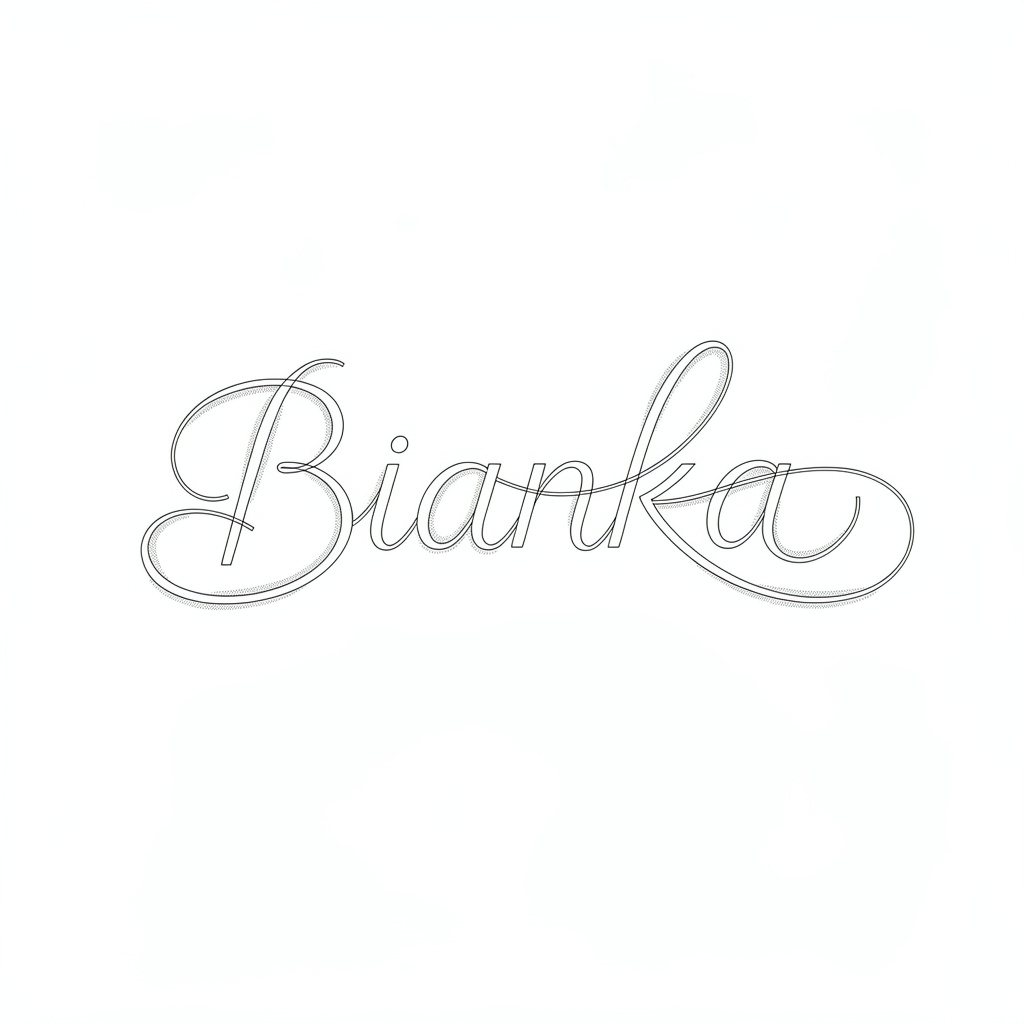
A minimalist Lumoscript tattoo concept where the name Bianka appears in ultra-fine, flowing lines with delicate depth effects.
While the name Bianka is overwhelmingly used as a female given name, its soft sounds and elegant rhythm could theoretically lend it to gender-neutral usage in modern contexts. In countries such as Hungary, Poland, and Germany, it is firmly recognized as feminine. As naming trends evolve globally, parents occasionally adapt traditionally feminine names like Bianka for broader, creative gender expressions.
The name Bianka enjoys moderate popularity, particularly in Central and Eastern Europe. It has seen notable use in countries such as Hungary, Poland, and Slovakia, often ranking within national top 200–300 lists in recent decades. In English-speaking countries it is less common than "Bianca," giving Bianka a distinctive, slightly exotic feel while still remaining easy to pronounce and recognize worldwide.
The name Bianka appears across many regions, with especially frequent use in Hungary, Poland, Germany, and Italy. Pronunciation typically follows "Bee-ahn-kah" or "Byan-kah," depending on language. In Slavic and Central European contexts the spelling Bianka is preferred over Bianca, emphasizing both international familiarity and local cultural flavor.
Usage and gender distribution of the name Bianka across different countries, based on data from GenderAPI.
Gender and popularity analysis by country is based on data from Gender API.
A widely used variant meaning pure or white, popular in Italian and Spanish-speaking countries.
Spanish form traditionally interpreted as white or bright, carrying similar symbolism of clarity and innocence.
French-derived name meaning white, associated with refinement and classic elegance.
Compound name often combining ideas of purity and grace, giving a double-layered sense of delicacy.
Hybrid name suggesting purity and beauty, often linked with floral and romantic imagery.
Modern compound that can merge meanings of light, famous warrior, or renowned in battle, depending on interpretation of Louise.
Pairing conveys ideas of purity and wisdom, favored in many European naming traditions.
Combination that evokes purity and light, blending Latin and Greek name roots.
Slavic name sometimes associated with God is gracious, sharing stylistic similarity with Bianka.
Central European variant linked to white and bright, close in sound and spirit to Bianka.
Often perceived as elegant in manner and communication, bringing calmness to social settings.
Sensitive to others’ feelings, Bianka types are seen as caring listeners and loyal friends.
Known for reliability and a strong sense of responsibility in personal and professional life.
Tends to appreciate art, beauty, and original ideas, expressing individuality thoughtfully.
Maintains a hopeful outlook, inspiring positivity in those around them.
Combines creativity and aesthetics, fitting the refined and artistic associations of the name.
Aligns with empathy, listening skills, and emotional intelligence.
Reflects patience, clarity, and a nurturing approach to learning.
Uses communication skills and diplomacy to build strong relationships.
Embodies care, responsibility, and dedication to others’ well-being.
As a variant of Bianca, the name indirectly shares ties with classic literature, including Shakespearean traditions.
The "k" in Bianka gives it a Central and Eastern European flair compared with the more common "Bianca."
Bianka works well in many languages, retaining similar pronunciation with slight regional accents.
Balances a timeless meaning of purity with a contemporary, stylish look.
Answers to the most common questions people ask about the name Bianka.
Bianka is commonly associated with meanings such as pure, innocent, and white in a symbolic sense, suggesting clarity, sincerity, and inner grace.
The name Bianka is a variant of Bianca, ultimately derived from the late Latin word 'blancus' meaning white or bright, with strong roots in Italian and Central/Eastern European usage.
Bianka has moderate popularity, particularly in Central and Eastern European countries such as Hungary and Poland, while being less common than Bianca in English-speaking regions.
Bianka is predominantly used as a feminine given name across most countries, though modern naming trends may occasionally inspire creative, gender-neutral use.
Bianka is usually pronounced BYAN-kah, with a soft initial 'B' and an open 'a' sound at the beginning and end, similar across many European languages.