
Meaning of the Name Faisal
Origin of the Name Faisal
Gender Association of the Name Faisal
Popularity of the Name Faisal
Global Usage of the Name Faisal
Characteristic Features of People Named Faisal
Leadership
Individuals named Faisal often exhibit strong leadership abilities, naturally guiding others with decisiveness and confidence.
Justice-Oriented
Embodying fairness, they strive for justice and equality, offering balanced judgment in complex situations.
Articulate
Faisals usually communicate effectively, conveying ideas with clarity and persuasion.
Resilient
They possess a tenacity that allows them to overcome challenges and emerge stronger from adversities.
Analytical Mind
Their ability to analyze complex data and scenarios is remarkable, often leading to innovative solutions.
Charisma
Faisals have a charming presence that attracts diverse circles of friends and allies.
Compassionate
Despite their strong demeanor, they hold deep compassion and empathy for others.
Honest
Integrity is a hallmark of their character, ensuring honesty in both personal and professional realms.
Visionary
They have the foresight to envision potential paths and opportunities, fostering growth and progress.
Intelligent
Intellectual curiosity drives them to explore new ideas, contributing to a profound depth of knowledge.
Common Career Paths for People Named Faisal
Politics and Diplomacy
Many Faisals excel in political or diplomatic roles, leveraging their strong decision-making skills and authoritative presence.
Law and Judiciary
They often gravitate towards careers in law, where their sense of justice and fairness can be applied.
Business Leadership
Faisals make effective business leaders, utilizing strategic thinking and visionary insights to drive organizations forward.
Academia
Intellectual pursuits lead many to academia, where they engage in critical research and teaching endeavors.
Public Speaking
Some pursue careers related to communication or motivational speaking, highlighted by their articulate and charismatic abilities.
Nonprofit Sector
Empathetic Faisals often engage with NGOs or grassroots organizations to effect social change and humanitarian aid.
Military
Their resilience and courage find a place in military service, where strategic and leadership qualities are crucial.
Literary Arts
Creative expression, through writing or literary pursuits, offers a fulfilling path for expressive Faisals.
Health and Counseling
Driven by compassion, some explore careers in healthcare or psychological counseling, aiding personal and community well-being.
Technology and Innovation
Innovative thinking and problem-solving skills guide many towards technology-driven roles.
Unique and Interesting Characteristics of the Name Faisal
Historic Significance
Faisal is known for its royal heritage, particularly linked to King Faisal of Saudi Arabia, a pivotal figure in modern history.
Cultural Representation
The name features prominently in literature and film, denoting characters with leadership and integrity.
Symbolic Representation
Often used symbolically in global media to represent diplomatic and judicial ideals.
Variants and Adaptations
While largely unchanged, variations such as Faizal can be found in South Asian cultures.
Commemorative Uses
Frequently chosen for establishments, institutions, and events to denote prestige and authority.
Literary Appearances
It appears in novels and historical accounts, often illustrating figures with discernment skills.
Astronomical Recognition
Some celestial objects or phenomena may carry the name, honoring humanity's lofty aspirations.
Naming in Media
Documentaries and public narratives often adopt the name when embodying wisdom or justice-themed content.
Linguistic Attributes
Phonetically smooth, the name transitions well across multiple languages and dialects globally.
Philosophical Meanings
Inspiring philosophical discourse, the name denotes clarity and the pursuit of truth.
Famous People Named Faisal
- King Faisal: Third King of Saudi Arabia, known for his modernization policies and strong leadership.
- Faisal Shahzad: Pakistani-American convicted in a 2010 bombing attempt, noteworthy for international security discussions.
- Faisal I of Iraq: King of Iraq, instrumental in the shaping of modern Iraqi governance.
- Faisal Alam: Pakistani-American Muslim LGBT rights activist, noted for advocacy and community building.
Faisal Artistic Name Tattoo Concepts
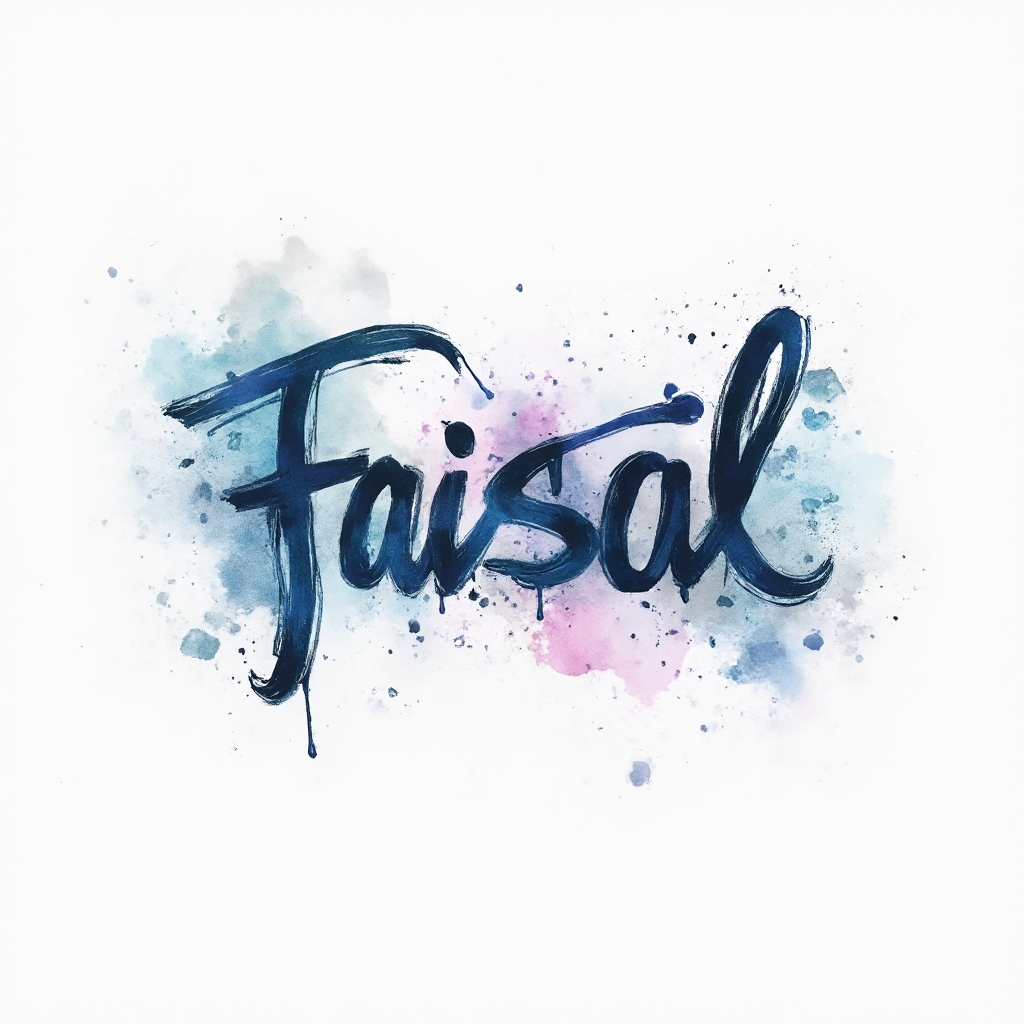
Faisal Watercolor Name Tattoo Concept

Faisal Surrealism Script Tattoo Design
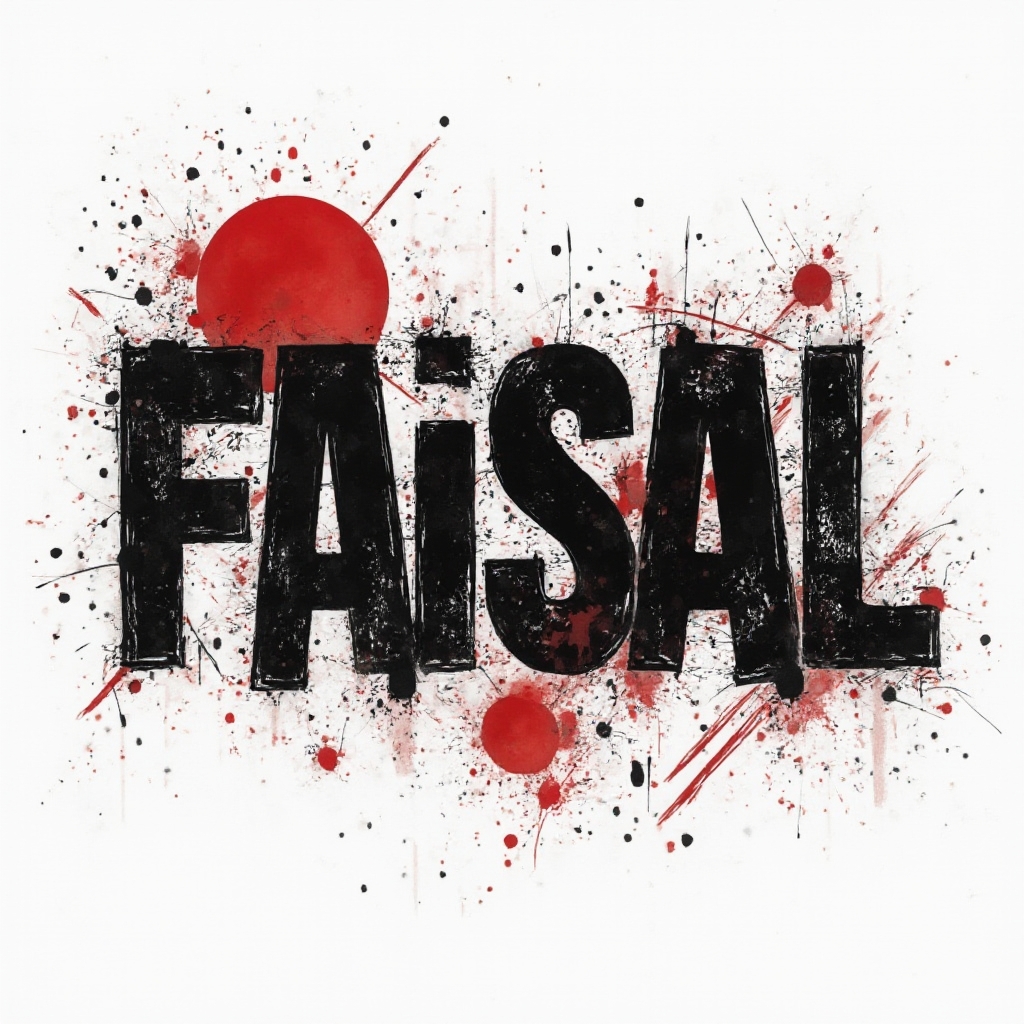
Faisal Trash Polka Name Tattoo Artwork

Faisal AI-Original-Style Abstract Name Tattoo
Global distribution & gender ratio
Saudi Arabia
66.27% of recorded usage
Female: 1.76% · Male: 98.24%
Indonesia
9.18% of recorded usage
Female: 1.64% · Male: 98.36%
Kuwait
7.21% of recorded usage
Female: 1.56% · Male: 98.44%
Malaysia
3.34% of recorded usage
Female: 0.32% · Male: 99.68%
United States
2.73% of recorded usage
Female: 0.00% · Male: 100.00%
You may also like
Similar names
Faraz
Meaning elevated, this name denotes someone of esteemed status or virtue.Faizan
Conveying beneficence, it represents kindness and a disposition towards giving.Zaid
Translated as growth, this name signifies prosperity and increase.Naeem
Meaning blessing or comfort, it highlights peace and well-being.Raees
With a connotation of chief or leader, it signifies authority and command.Sami
Symbolizing someone exalted, it reflects high status and respect.Tariq
Known as morning star, it alludes to guidance and new beginnings.Rafay
Designating excellence, it denotes someone who surpasses others in achievements.Adnan
Embodying settler, it signifies stability and establishment.Saif
Meaning sword, it's associated with protection and bravery.
Frequently asked questions about faisal
What does the name Faisal mean?
The name Faisal is associated with authority and decision-making, symbolizing justice and impartial judgment.
Where does the name Faisal originate from?
Faisal has its roots in the Arabic language, with deep cultural and historical ties to the Middle East.
Is the name Faisal male or female?
Faisal is primarily a male name, although perceptions may vary in different cultures.
How popular is the name Faisal?
Faisal is widely popular in the Middle East and among Arabic-speaking communities globally, maintaining a traditional significance.
How is the name Faisal used globally?
Faisal is predominantly used in Middle Eastern and South Asian cultures, maintaining its Arabic phonetic form.
What careers suit people named Faisal?
Faisals often excel in politics, law, business leadership, academia, and public speaking due to their leadership and communication skills.
What are the characteristics of people named Faisal?
Individuals named Faisal are often seen as leaders, justice-oriented, articulate, resilient, and compassionate.
What are some similar names to Faisal?
Similar names include Faraz, Faizan, Zaid, Naeem, Raees, Sami, Tariq, Rafay, Adnan, and Saif.
Who are some famous people named Faisal?
Famous Faisals include King Faisal of Saudi Arabia, Faisal Shahzad, Faisal I of Iraq, and Faisal Alam.