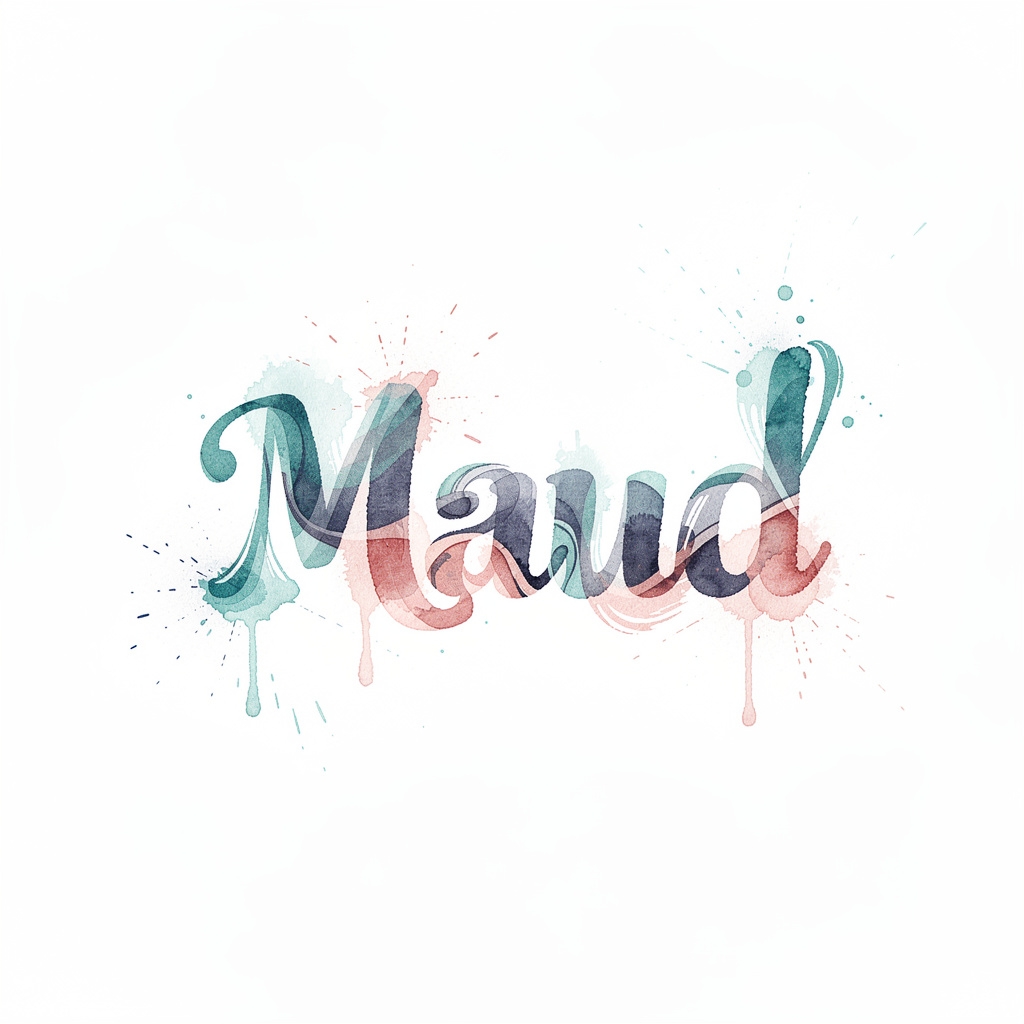
Watercolor Maud Name Tattoo Design
Ethereal watercolor tattoo concept where the name Maud emerges from layered washes of color.

Maud means strength in battle with noble resilience.
MAUD is a classic name associated with strength in battle and a quietly noble spirit. This page explores its meaning, historical roots, feminine usage, popularity over time, and names connected to it.
The name Maud is traditionally interpreted as “strength in battle” or “powerful in war,” reflecting a legacy of resilience and inner fortitude. Rooted in medieval forms of Matilda, Maud evokes images of a determined, noble character. Parents who choose Maud often value strong, noble, and brave qualities, giving the name a timeless, dignified charm that feels both classic and quietly distinctive.
/mɔːd/ - Maud
mawd
The name Maud traces back to the medieval form of Matilda, with deep roots in Germanic and Norman traditions. Popularized in medieval Europe, it was carried to England after the Norman Conquest and became associated with queens, noblewomen, and saints. Over centuries, Maud evolved through courtly literature, royal records, and everyday use, preserving a sense of historical elegance and quietly regal presence that still appeals to modern parents.
Ethereal watercolor tattoo concept where the name Maud emerges from layered washes of color.
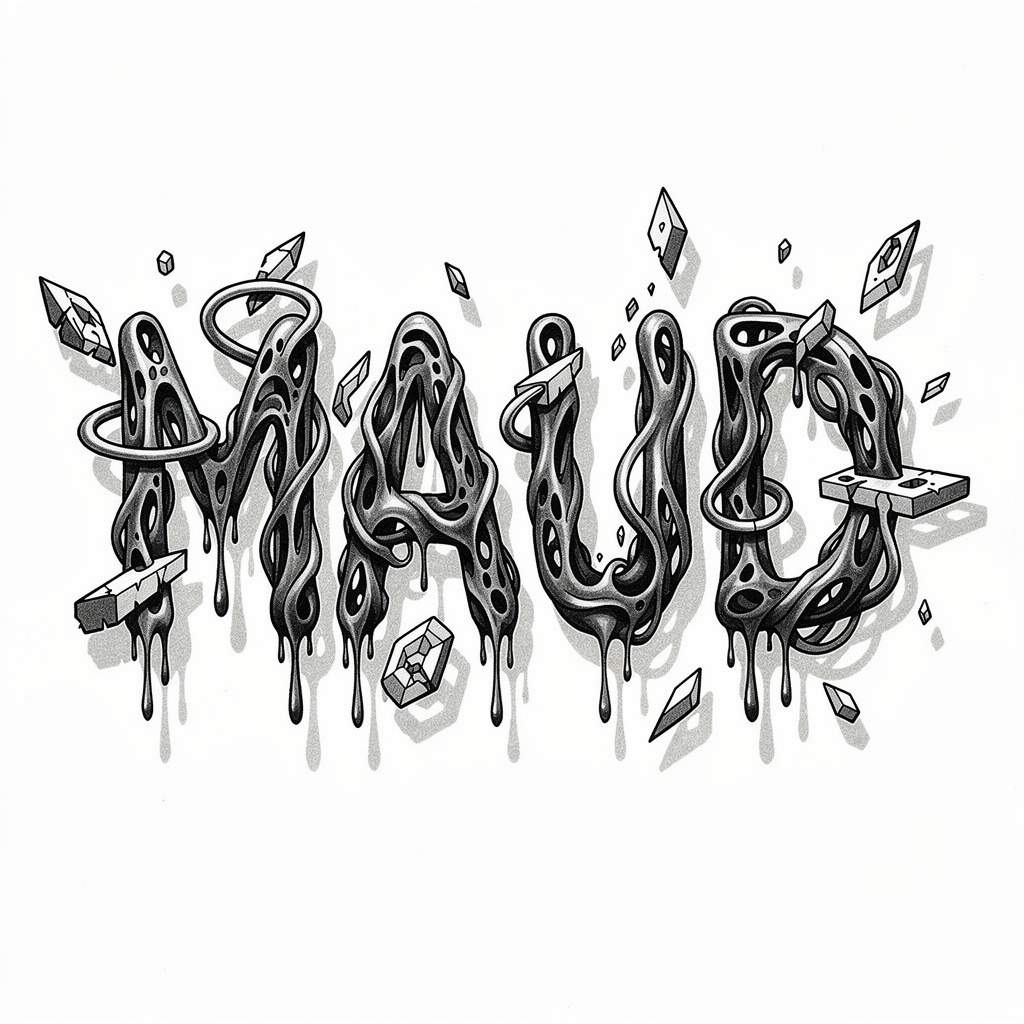
Surreal black and grey tattoo design where distorted shapes and shadows form the letters of Maud.
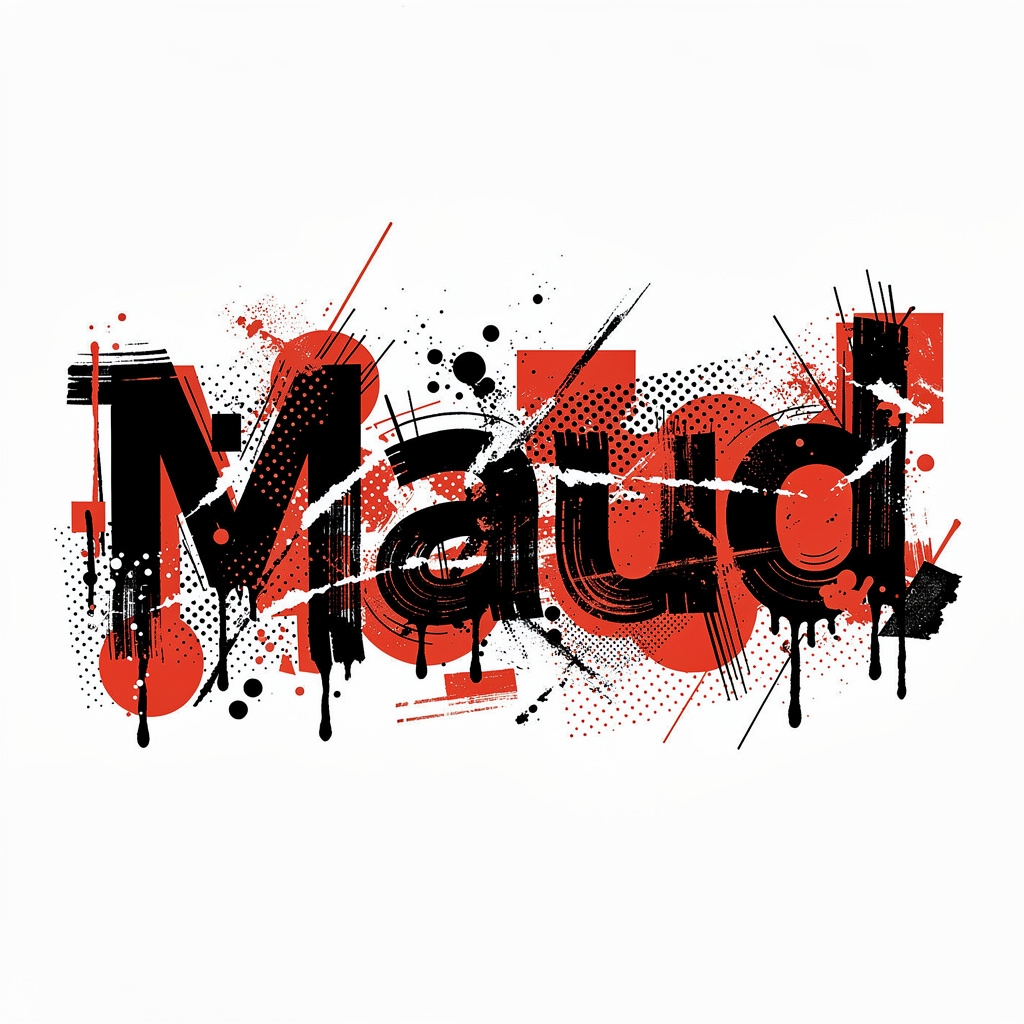
High-impact Trash Polka tattoo idea where bold strokes and red accents construct the name Maud.

Refined ornamental tattoo concept in the Auralux style, where filigree linework shapes the name Maud.
Historically, Maud has been used almost exclusively as a feminine given name, aligning it strongly with female identity in most cultures. In countries like France, the UK, Belgium, and the Netherlands, Maud is recognized as a classic girl’s name, though rare modern unisex experiments may occur. Globally, its spelling and sound signal traditional femininity, making it a choice for parents seeking a vintage yet international-feeling girl’s name.
The name Maud enjoyed notable popularity in late 19th- and early 20th-century Britain and parts of Europe, then declined as fashions shifted toward other classics. Today, Maud is relatively rare in English-speaking countries but retains modest use in places like France, Belgium, and the Netherlands. Its lower rankings give it a distinctive, vintage appeal, appealing to parents who favor familiar yet uncommon names with historic depth.
Worldwide, the name Maud appears most often in France, the United Kingdom, Belgium, and the Netherlands, with smaller pockets of use in Canada and Australia. Pronunciation may vary from “mawd” in English to a softer French-inspired sound. Its consistent spelling across languages makes Maud easy to recognize internationally while preserving a refined, old-world charm.
Usage and gender distribution of the name Maud across different countries, based on data from GenderAPI.
Gender and popularity analysis by country is based on data from Gender API.
Vintage name meaning strength in battle, closely related in origin to Maud.
Alternative spelling with the same root and meaning of strength in battle.
Continental variant meaning mighty in battle, popular in French- and German-speaking regions.
Affectionate diminutive linked to meanings of strength and bravery.
Classic name often associated with great or dark origins, sharing an old-world charm.
Gentle vintage name interpreted as lovable or dear.
Traditional name frequently linked with lady or mistress of the house meanings.
Old-fashioned favorite tied to the meaning pure or chaste.
Historic name associated with prosperous in war or wealth and battle.
Often seen as determined and capable of standing firm in her convictions.
Combines inner strength with outward poise and refined manners.
Deeply committed to family, friends, and long-term responsibilities.
Reflective, considerate, and inclined to think carefully before acting.
Values autonomy and personal direction, often forging her own path.
Drawn to exploring the past, archives, and cultural heritage.
Uses language with precision and sensitivity to convey complex ideas.
Combines determination with a strong sense of justice and advocacy.
Enjoys research, teaching, and contributing to intellectual life.
Appreciates history, aesthetics, and the preservation of artistic works.
Maud has been borne by queens and princesses in European royal families.
The name appears in classic poetry and novels, adding to its cultured aura.
Maud fits the trend of reviving antique names with minimalist charm.
Recognized in several European languages with minimal spelling change.
Can inspire modern nicknames or be paired stylishly with middle names.
Answers to the most common questions people ask about the name Maud.
Maud generally means ‘strength in battle’ or ‘powerful in war,’ reflecting resilience, courage, and noble character.
The name Maud originates from the medieval form of Matilda, with roots in Old High German and strong usage in Norman French and medieval England.
Maud is less common in modern English-speaking countries but retains modest popularity in parts of Europe, giving it a rare, vintage appeal.
Maud is traditionally a feminine name and is used almost exclusively for girls in most cultures.
Maud is commonly pronounced as ‘mawd,’ with a long ‘aw’ sound, represented in IPA as /mɔːd/.